
Notable Matches · Historical figures
The Alans of the North Caucasus
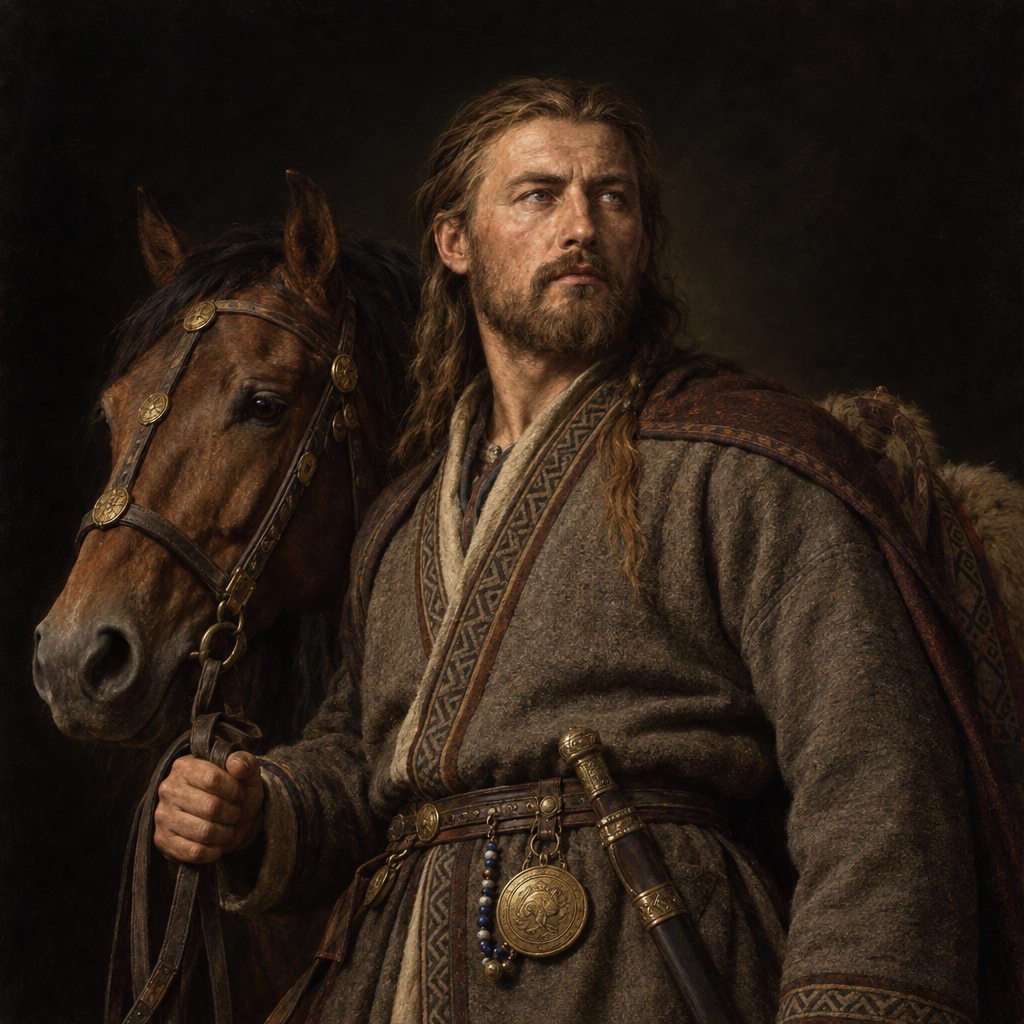
The Alans of the North Caucasus (c. 350-1100 CE · Zaragizh, Kabardino-Balkaria, Russia): what the published ancient DNA shows, 11 sequenced genomes, and how close your own Global25 coordinates come. Free with every Ancestry Map.
The dossier
- Catalog tier
- Historical figures
- Period
- c. 350-1100 CE
- Found
- Zaragizh, Kabardino-Balkaria, Russia
- Sequenced genomes
- 11 (CGG022004, DA162.SG, DA164.SG, DA243.SG, CGG022005, CGG022003, DA160.SG, CGG022000, CGG022002, CGG021996, DA146.SG)
Who they were
The Alans were Iranian-speaking heirs of the Sarmatians, dominant on the western steppe by the first century CE until the Huns broke them apart in the 370s. Those who held on in the North Caucasus built Christian Alania between the ninth and thirteenth centuries, and the Ossetians descend from them; the very name Ossete comes from As, a name for the Alans. These eleven people come from the fortified settlement of Zaragizh in Kabardino-Balkaria and from cemeteries in North Ossetia, including the Beslan district, type site of the early Alanic catacomb burials. Their genomes mix Caucasus ancestry of Kura-Araxes character with steppe ancestry, and their paternal lineages include R1, Q, G2a1 and R1b.
The genome-wide data behind this entry was published in Steppe Ancestry in Western Eurasia and the Spread of the Germanic Languages.
How your distance is measured
Every Ancestry Map includes the free Notable Matches lens: your coordinates are compared to every sequenced member of every catalog entry, and the distance to the closest member is reported, a Euclidean distance in the same 25-dimensional space the Distance lens uses. Because these are a small group of real individuals, not a population average, distances naturally run larger than population distances. That is expected, not a poor result. And one thing is never claimed: a small distance means similar ancestry composition, not that the Alans of the North Caucasus are your ancestor. See how it looks in the live demo or read about Ancestry Map, the full Global25 report.
Questions
Who were the Alans of the North Caucasus?
The Alans of the North Caucasus (c. 350-1100 CE, Zaragizh, Kabardino-Balkaria, Russia) are one of the Historical figures entries in our Notable Matches catalog, represented by 11 sequenced ancient genomes published in the study "Steppe Ancestry in Western Eurasia and the Spread of the Germanic Languages".
What does "matching" the Alans of the North Caucasus mean?
Your Global25 coordinates are compared to the entry's sequenced members and the distance to the closest one is reported, a Euclidean distance in the same 25-dimensional reference space the Distance lens uses. A notable entry is one person or one small burial group, not a population average, so distances naturally run larger than population distances.
Are they my ancestor?
No, and no DNA test can show that. A small distance means your genome sits near theirs in a shared reference space: similar ancestry composition, not descent. Ancestrify never claims a notable individual is your ancestor or relative.
How do I see my own distance to the Alans of the North Caucasus?
Notable Matches is a free lens on every Ancestry Map, never sold separately. Order Ancestry Map, our Global25 analysis (29.99 EUR), and your report ranks your coordinates against the full catalog, with a portrait, dossier and map for every entry. The public demo shows the lens with example data.
More from the catalog
The catalog holds every published entry across three tiers. Browse the full Notable Matches directory. Nearby entries:
The Chen Clan of the Tang Frontierearly 8th century CE
The Salme Ship Warriorsc. 750 CE
The Early Medieval Georgiansc. 400-900 CE
The Early Medieval Slavs of Velimc. 650-950 CE
The Kunbábony Avar Khagan630-670 CE
Bishop Teodomiro of Iria Flaviad. 847 CE
The Byzantine Villagers of Chhîmc. 430-760 CE
The Türks of Gurvan Dovc. 540-635 CE
Empress Ashina551-582 CE
The Medieval Islanders of Soqotrac. 650-1150 CE
Emperor Wu of Northern Zhou543-578 CE
The Christians of Nicaea's Sunken Basilicac. 350-700 CE