
Notable Matches · Iconic discoveries
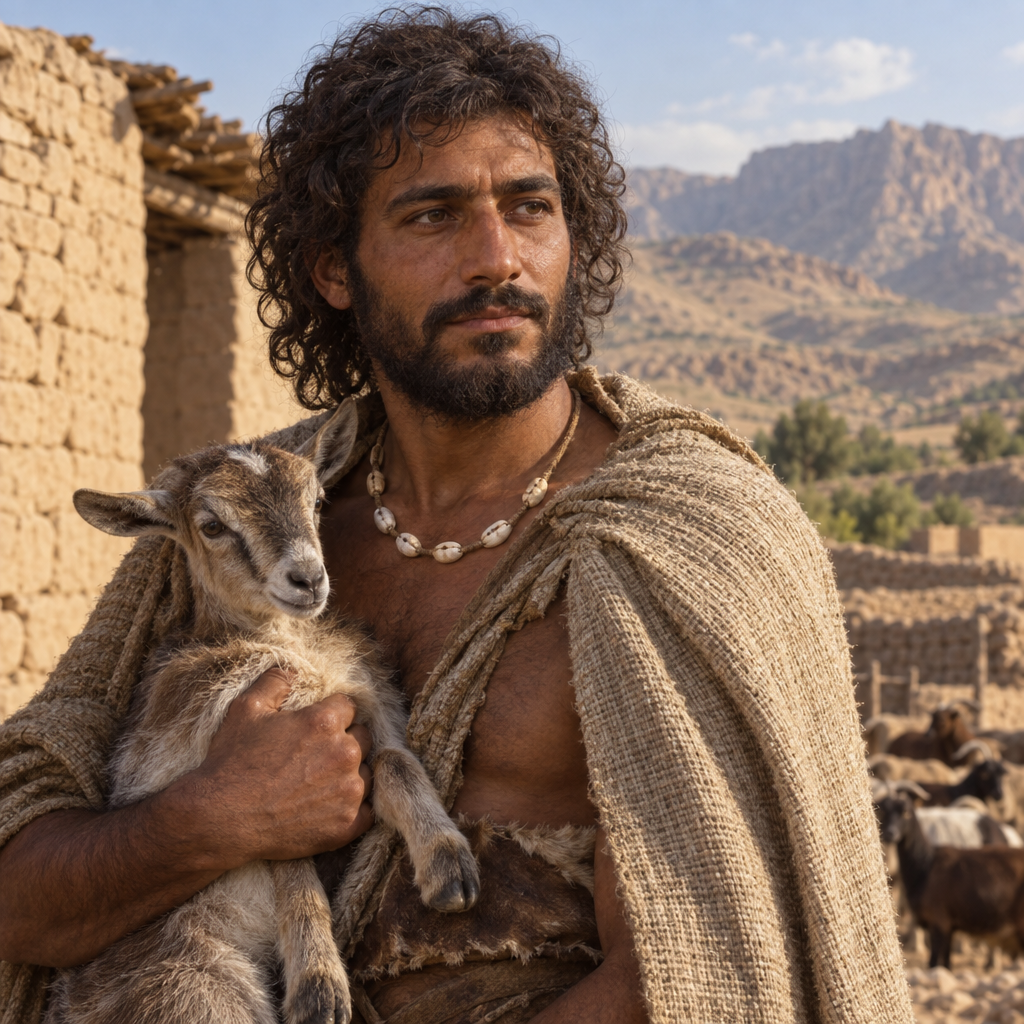
The First Goat Herders of Ganj Dareh
The First Goat Herders of Ganj Dareh (c. 8250-7800 BCE · Ganj Dareh, Kermanshah, Iran): what the published ancient DNA shows, 6 sequenced genomes, and how close your own Global25 coordinates come. Free with every Ancestry Map.
The dossier
- Catalog tier
- Iconic discoveries
- Period
- c. 8250-7800 BCE
- Found
- Ganj Dareh, Kermanshah, Iran
- Sequenced genomes
- 6 (I1290.AG, I1949.AG, I1945_enhanced, I7527_enhanced, I1954.AG, I1947.AG)
Who they were
Ganj Dareh, a small mound in the Zagros foothills of Kermanshah, holds the earliest evidence for the domestication of the goat, worked out from the bones of the animals its people culled. Around 8000 BCE these six people lived in one of the first herding villages on earth. Their genomes were a surprise: Neolithic Iranians carried roughly half of the deep Basal Eurasian ancestry and were sharply distinct from the farmers of Anatolia, so farming arose in the Near East among peoples who were not one population. That Zagros lineage went on to become a major source for South Asians and for modern Iranians. Paternal lineages R2 and G2a were found among them.
The genome-wide data behind this entry was published in Genomic insights into the origin of farming in the ancient Near East.
How your distance is measured
Every Ancestry Map includes the free Notable Matches lens: your coordinates are compared to every sequenced member of every catalog entry, and the distance to the closest member is reported, a Euclidean distance in the same 25-dimensional space the Distance lens uses. Because these are a small group of real individuals, not a population average, distances naturally run larger than population distances. That is expected, not a poor result. And one thing is never claimed: a small distance means similar ancestry composition, not that the First Goat Herders of Ganj Dareh are your ancestor. See how it looks in the live demo or read about Ancestry Map, the full Global25 report.
Questions
Who were the First Goat Herders of Ganj Dareh?
The First Goat Herders of Ganj Dareh (c. 8250-7800 BCE, Ganj Dareh, Kermanshah, Iran) are one of the Iconic discoveries entries in our Notable Matches catalog, represented by 6 sequenced ancient genomes published in the study "Genomic insights into the origin of farming in the ancient Near East".
What does "matching" the First Goat Herders of Ganj Dareh mean?
Your Global25 coordinates are compared to the entry's sequenced members and the distance to the closest one is reported, a Euclidean distance in the same 25-dimensional reference space the Distance lens uses. A notable entry is one person or one small burial group, not a population average, so distances naturally run larger than population distances.
Are they my ancestor?
No, and no DNA test can show that. A small distance means your genome sits near theirs in a shared reference space: similar ancestry composition, not descent. Ancestrify never claims a notable individual is your ancestor or relative.
How do I see my own distance to the First Goat Herders of Ganj Dareh?
Notable Matches is a free lens on every Ancestry Map, never sold separately. Order Ancestry Map, our Global25 analysis (29.99 EUR), and your report ranks your coordinates against the full catalog, with a portrait, dossier and map for every entry. The public demo shows the lens with example data.
More from the catalog
The catalog holds every published entry across three tiers. Browse the full Notable Matches directory. Nearby entries:
The First Farmers of 'Ain Ghazalc. 8300-7500 BCE
The Doggerland Foragersc. 8400-7200 BCE
Cheddar Manc. 8300 BCE
The First People of Lagoa Santac. 8400 BCE
The Spirit Cave Mummyc. 8600 BCE
The Fisher-Foragers of Lepenski Virc. 9500-5500 BCE
The Farmers of Çatalhöyükc. 7100-5900 BCE
The First Farmers of Nea Nikomedeiac. 6300-6000 BCE
The First Farmers of Barcınc. 6500-5900 BCE
Loschbour Manc. 6100 BCE
The Shum Laka Childrenc. 6000 BCE and 1000 BCE
The Hòabìnhian of Pha Faenc. 6000 BCE