
Notable Matches · Iconic discoveries
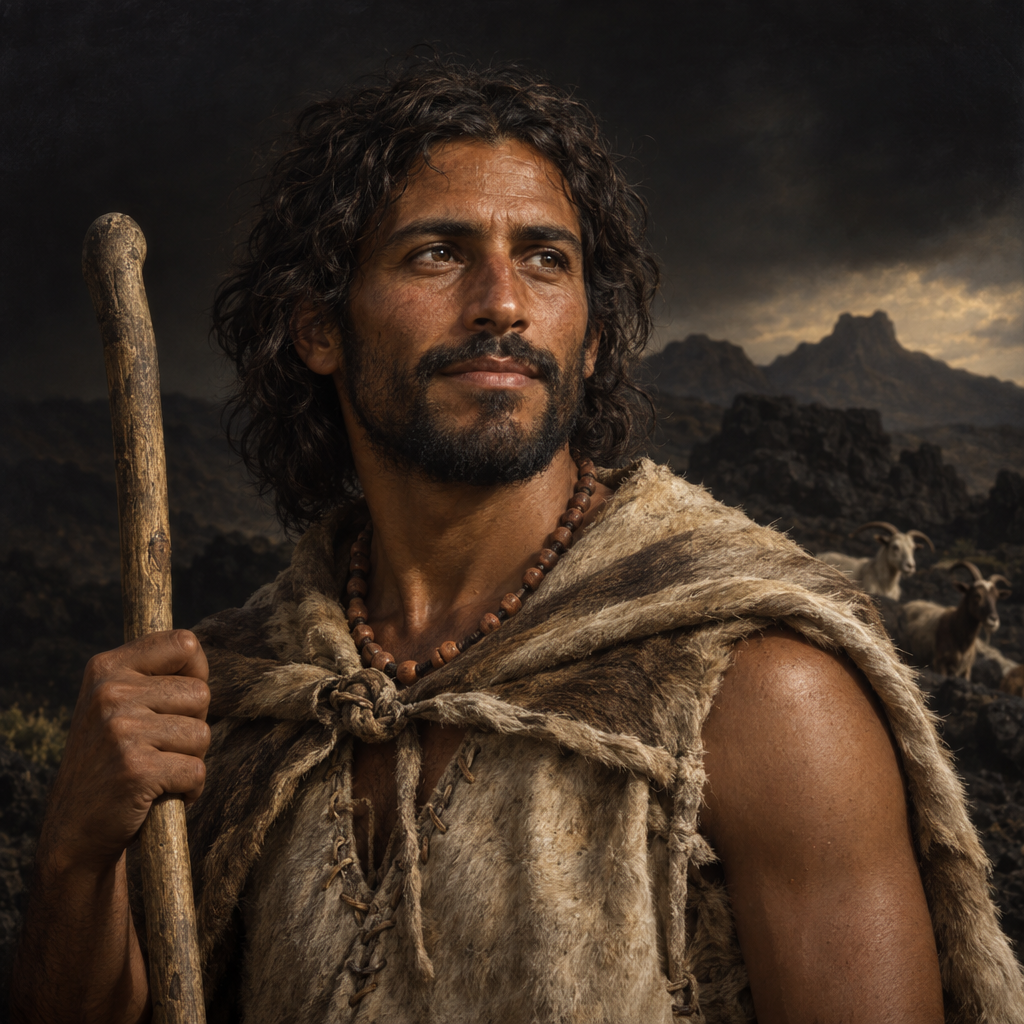
The Guanches
The Guanches (c. 300-1500 CE · The Canary Islands, Spain): what the published ancient DNA shows, 12 sequenced genomes, and how close your own Global25 coordinates come. Free with every Ancestry Map.
The dossier
- Catalog tier
- Iconic discoveries
- Period
- c. 300-1500 CE
- Found
- The Canary Islands, Spain
- Sequenced genomes
- 12 (CAN.036, CAN.042, CAN.048, CAN.004, CAN.001, CAN.005, CAN.008, CAN.012, CAN.014, CAN.017, CAN.018, CAN.038)
Who they were
When Castilian ships reached the Canary Islands in the fifteenth century they found the Guanches, islanders of Berber descent who had lived cut off on their volcanic islands for well over a thousand years. These twelve people were buried across the archipelago. Their genomes are about three quarters Late Neolithic Moroccan, with a steppe-related share of around 13 percent, a smaller Early Neolithic Moroccan thread and about 6 percent sub-Saharan ancestry; the western islands were more purely North African, the eastern ones more steppe-influenced. On the small islands, long runs of homozygosity after the twelfth century reveal close-kin unions in tiny populations. The paternal lineage E-M183 dominated, and modern Canarians still carry roughly 18 percent indigenous ancestry.
The genome-wide data behind this entry was published in The genomic history of the indigenous people of the Canary Islands.
How your distance is measured
Every Ancestry Map includes the free Notable Matches lens: your coordinates are compared to every sequenced member of every catalog entry, and the distance to the closest member is reported, a Euclidean distance in the same 25-dimensional space the Distance lens uses. Because these are a small group of real individuals, not a population average, distances naturally run larger than population distances. That is expected, not a poor result. And one thing is never claimed: a small distance means similar ancestry composition, not that the Guanches are your ancestor. See how it looks in the live demo or read about Ancestry Map, the full Global25 report.
Questions
Who were the Guanches?
The Guanches (c. 300-1500 CE, The Canary Islands, Spain) are one of the Iconic discoveries entries in our Notable Matches catalog, represented by 12 sequenced ancient genomes published in the study "The genomic history of the indigenous people of the Canary Islands".
What does "matching" the Guanches mean?
Your Global25 coordinates are compared to the entry's sequenced members and the distance to the closest one is reported, a Euclidean distance in the same 25-dimensional reference space the Distance lens uses. A notable entry is one person or one small burial group, not a population average, so distances naturally run larger than population distances.
Are they my ancestor?
No, and no DNA test can show that. A small distance means your genome sits near theirs in a shared reference space: similar ancestry composition, not descent. Ancestrify never claims a notable individual is your ancestor or relative.
How do I see my own distance to the Guanches?
Notable Matches is a free lens on every Ancestry Map, never sold separately. Order Ancestry Map, our Global25 analysis (29.99 EUR), and your report ranks your coordinates against the full catalog, with a portrait, dossier and map for every entry. The public demo shows the lens with example data.
More from the catalog
The catalog holds every published entry across three tiers. Browse the full Notable Matches directory. Nearby entries:
The Ceramic Age Islanders of Hispaniolac. 250-1500 CE
The Komani-Kruja Culturec. 800-950 CE
The Early Iron Age of the Okavangoc. 700-1000 CE
The Taíno Woman of Preacher's Cavec. 950 CE
The Vikingsc. 750-1050 CE
The Settlers of Icelandc. 870-1100 CE
The Hungarian Conquerors10th century CE
The Ancient Puerto Ricansc. 550-1350 CE
The Christians of Sigtunac. 900-1050 CE
The Kulubnarti Nubiansc. 650-1000 CE
The Skeleton Lake of Roopkundc. 800 CE and 1800 CE
The Maya of Chichén Itzác. 600-1100 CE