
Notable Matches · Historical figures
The Medieval Rus' of Galicia
The Medieval Rus' of Galicia (c. 1000-1300 CE · Korolivka, Ternopil oblast, and Pidhirtsi, Lviv oblast, Ukraine): what the published ancient DNA shows, 12 sequenced genomes, and how close your own Global25 coordinates come. Free with every Ancestry Map.
The dossier
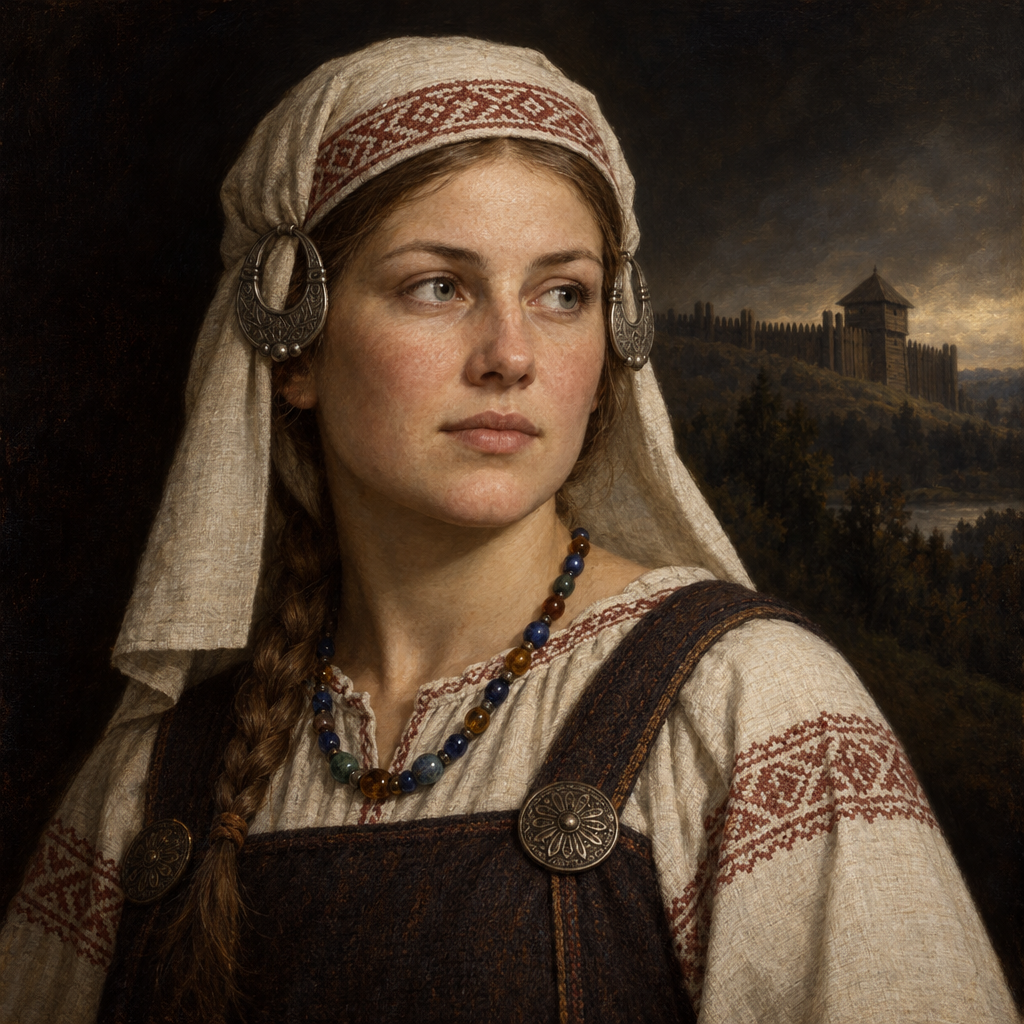
- Catalog tier
- Historical figures
- Period
- c. 1000-1300 CE
- Found
- Korolivka, Ternopil oblast, and Pidhirtsi, Lviv oblast, Ukraine
- Sequenced genomes
- 12 (KRW004, PDH010, KRW006, KRW008, KRW011, PDH012, KRW001, KRW003, KRW014, PDH007, KRW005, KRW009)
Who they were
In the hills of Galicia lay the western lands of medieval Rus'. Pidhirtsi in Lviv oblast stands in the Plisnesk hillfort area of Halych-Volhynian Rus', and Korolivka lies in Ternopil oblast to the southeast. Twelve people from the two sites, buried between about 1000 and 1300 CE, are gathered here. Their importance is genetic rather than princely: of all the medieval populations sampled, these northwestern Ukrainians are the closest reference to the inferred Slavic homeland, the country between the Dniester and the Don stretching from southern Belarus to central Ukraine, out of which the Slavic migrations of the early Middle Ages spread west and south. They are as close as ancient DNA yet comes to the source population of the Slavic expansion, living on in the same country half a millennium later.
The genome-wide data behind this entry was published in Ancient DNA connects large-scale migration with the spread of Slavs.
How your distance is measured
Every Ancestry Map includes the free Notable Matches lens: your coordinates are compared to every sequenced member of every catalog entry, and the distance to the closest member is reported, a Euclidean distance in the same 25-dimensional space the Distance lens uses. Because these are a small group of real individuals, not a population average, distances naturally run larger than population distances. That is expected, not a poor result. And one thing is never claimed: a small distance means similar ancestry composition, not that the Medieval Rus' of Galicia are your ancestor. See how it looks in the live demo or read about Ancestry Map, the full Global25 report.
Questions
Who were the Medieval Rus' of Galicia?
The Medieval Rus' of Galicia (c. 1000-1300 CE, Korolivka, Ternopil oblast, and Pidhirtsi, Lviv oblast, Ukraine) are one of the Historical figures entries in our Notable Matches catalog, represented by 12 sequenced ancient genomes published in the study "Ancient DNA connects large-scale migration with the spread of Slavs".
What does "matching" the Medieval Rus' of Galicia mean?
Your Global25 coordinates are compared to the entry's sequenced members and the distance to the closest one is reported, a Euclidean distance in the same 25-dimensional reference space the Distance lens uses. A notable entry is one person or one small burial group, not a population average, so distances naturally run larger than population distances.
Are they my ancestor?
No, and no DNA test can show that. A small distance means your genome sits near theirs in a shared reference space: similar ancestry composition, not descent. Ancestrify never claims a notable individual is your ancestor or relative.
How do I see my own distance to the Medieval Rus' of Galicia?
Notable Matches is a free lens on every Ancestry Map, never sold separately. Order Ancestry Map, our Global25 analysis (29.99 EUR), and your report ranks your coordinates against the full catalog, with a portrait, dossier and map for every entry. The public demo shows the lens with example data.
More from the catalog
The catalog holds every published entry across three tiers. Browse the full Notable Matches directory. Nearby entries:
King Béla III of Hungary1148-1196 CE
Prince Izyaslav Ingvarevichc. 1180-1223 CE
The Well-man of Sverresborgd. 1197 CE
The Piast Dynasty12th-16th century CE
The Christians of Stratonikeiac. 1000-1400 CE
The Crusader-Era Burials of Sidonc. 1150-1290 CE
Duke Béla of Macsó1245-1272 CE
Prince Gleb Svyatoslavich1052-1078 CE
Árpád Royals of the Székesfehérvár Basilica9th-12th century CE
The Elbe Slavs of Niederwünschc. 900-1200 CE
Grand Prince Dmitry Alexandrovich1250-1294 CE
Golden Horde Elite of the Jochi Khan Mausoleum13th-14th century CE