
Ancestry populations · Classical Antiquity
Late Antique Mount Lebanon
The villagers of Mount Lebanon in the late Roman, Byzantine and early Islamic centuries, heirs to the Levant's Bronze Age Canaanite ancestry. One of the 50 curated source populations in the Classical Antiquity era of Ancient Ancestry, Ancestrify's qpAdm analysis.
Who they were
- Period
- 430 to 760 AD
- Era in the analysis
- Classical Antiquity
- Region
- Mount Lebanon
- Role in the model
- Source (left) population, a reference qpAdm tests against
Mount Lebanon in Late Antiquity was a country of hill villages above the cities of the coast, under Byzantine rule and, from the 630s, under the first Arab caliphates. This source is built from two places in the mountains: the family tombs of Ej-Jaouze, high in the hills east of Beirut, and Chhim in the Chouf, a stone village above the coast between Beirut and Sidon with a Roman temple, a Byzantine church and the olive presses that made its living. Their genomes were published by Antonio et al. (2024) and dated directly by radiocarbon to between about AD 430 and 760.
Its people farmed terraced slopes, pressed olive oil for the towns of the coast and kept goats and sheep, and by this time most were Christians who spoke Aramaic at home, with Greek the language of the towns. Ancient genomes from Lebanon spanning four thousand years show the people of the coast and the mountains to be largely continuous with the Bronze Age Canaanites, with later admixture adding to that base rather than replacing it (Haber et al. 2017; Haber et al. 2020). That long local ancestry is still the largest part of the heritage of present-day Lebanese (Haber et al. 2017).
In Ancient Ancestry, Ancestrify's qpAdm analysis, Late Antique Mount Lebanon is a source in the "Classical Antiquity" era. The report shows its weight with a standard error and a Z-score, so you can see not only how much of the model it carries but how confidently that share is separated from zero, and a model that cannot support it is rejected rather than published. It is the era's Levantine reference from the mountains, beside the Eastern Mediterranean and Southern Levant sources of the same centuries and a thousand years after the Phoenician source of the same coast; read its weight together with theirs, since the model may divide one Levantine signal among them.
Y haplogroups J1, J2 and E1b1b, and mtDNA H, K, J and HV, are common in the region's populations. A haplogroup alone is never evidence of a share.
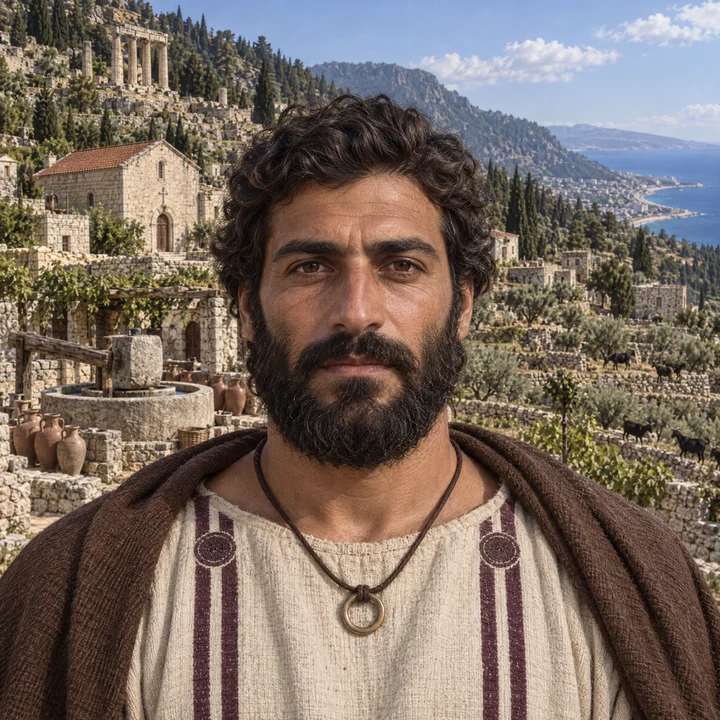
In your reportArtwork is an AI-generated artistic interpretation informed by the archaeological record, not documentary evidence.The villagers of Mount Lebanon in Late Antiquity, from the late Roman and Byzantine centuries into the first century of Arab rule, about 430 to 760 AD. They are known from two places in the hills: the family tombs of Ej-Jaouze, high in the mountains east of Beirut, and Chhim in the Chouf, a stone village above the coast between Beirut and Sidon with a Roman temple, a Byzantine church and the olive presses that made its living. They farmed the mountain slopes, pressed olive oil for the towns of the coast, kept goats and sheep and buried their dead together in family tombs. By this time most of them were Christians who spoke Aramaic at home, while Greek was spoken in the towns. Their ancestry is largely the long local inheritance of the Levant, reaching back to the Bronze Age Canaanites, and the Lebanese of today still carry much of it. This is the source a Levantine, Cypriot or eastern Mediterranean genome is tested against for its Late Antique Levantine share, a thousand years after the Phoenicians of the same coast.
Where this population sits in the model
Ancient Ancestry, our qpAdm analysis, models your genome once per era. The Classical Antiquity era has 50 curated source populations, and Late Antique Mount Lebanon is one of them: every candidate model for that era is a combination of these sources, tested against a fixed set of outgroup populations, and only a model that passes the statistical fit check is published, with a p-value and a standard error on every proportion.
A reference, not a verdict: every population on this page is a source the model tests your genome against, a well-sampled point in ancient genetic space that a mixture of ancestries can be expressed in terms of. A weight on it means your genome is well described as partly resembling those people; it is never a statement that they, specifically, were your ancestors, and a population that fits well is not the only one that could.
Read how qpAdm works on the Ancient Ancestry page, or the definitions in the glossary.
Model it yourself for free
The Ancestrify Lab runs in your browser, with no account. Paste a Global25 row into an admixture calculator that covers the Classical Antiquity era, rank the closest ancient populations in the distance tool, or run f4, qpWave and qpAdm on the public panel in the AdmixTools 2 workbench. These are Global25 fits and exploratory statistics, not the formal qpAdm model of Ancient Ancestry.
Albanian Calculator3 sources
Kosovo Albanian Calculator3 sources
Albanian and Torbes from North Macedonia Calculator3 sources
North Macedonian, Vlach, Turk and Slavic calculator5 sources
Albanian from Montenegro Calculator3 sources
Montenegrin Calculator5 sources
Albanian from Serbia Calculator3 sources
Serbian Calculator6 sources
Bosnian Calculator5 sources
Croatian Calculator6 sources
Slovenian calculator6 sources
Romanian Calculator4 sources
Moldovan Calculator5 sources
Bulgarian Calculator5 sources
Classic Greek Mainland Calculator + Arvanite5 sources
Greek Anatolia Pontus Aegean Calculator5 sources
Greek Macedonia & Thrace Calculator4 sources
Turkish Black Sea Calculator4 sources
Turkish Calculator4 sources
Central Italian Calculator5 sources
North Italian Calculator4 sources
Sicilian and South Italian Calculator4 sources
Spanish Calculator4 sources
Portuguese Calculator4 sources
French Calculator6 sources
German Calculator5 sources
Austrian Calculator4 sources
Swiss Calculator5 sources
Belgian calculator3 sources
Netherlandic calculator3 sources
Luxembourger Calculator5 sources
UK calculator5 sources
Irish Calculator3 sources
Icelandic calculator3 sources
Norse calculator5 sources
Swede calculator5 sources
Finnish Calculator3 sources
Dane calculator4 sources
Estonian Calculator4 sources
Latvian Calculator4 sources
Lithuanian Calculator4 sources
Polish Calculator5 sources
Czech calculator4 sources
Slovakian Calculator4 sources
Hungarian calculator6 sources
Belarusian Calculator4 sources
Ukrainian Calculator4 sources
Russian calculator5 sources
Cypriot Calculator4 sources
Andorran Calculator4 sources
Ashkenazi Jewish Calculator5 sources
Mizrahi Jewish Calculator6 sources
Mountain Jewish Calculator4 sources
Romaniote Jewish Calculator4 sources
Sephardi Jewish Calculator5 sources
European Roma Calculator4 sources
Armenian Calculator5 sources
Yazidi (Armenia) Calculator5 sources
Abkhaz & Ossetian (Georgia) Calculator5 sources
Georgian Calculator5 sources
Georgian Jew Calculator6 sources
Kist (Georgia) Calculator4 sources
Azerbaijani Calculator4 sources
Dagestani peoples of Azerbaijan Calculator3 sources
Kurd (Azerbaijan) Calculator5 sources
Moroccan Calculator5 sources
Algerian Arab & Amazigh Calculator4 sources
Mozabite Calculator4 sources
Tuareg (Algeria) Calculator3 sources
Tunisian Calculator4 sources
Liechtensteiner Calculator6 sources
Maltese Calculator4 sources
Monégasque Calculator4 sources
Sammarinese Calculator4 sources
Vatican Calculator4 sources
Bahraini Calculator5 sources
Assyrian & Armenian (Iran) Calculator5 sources
Azerbaijani & Talysh (Iran) Calculator4 sources
Baloch (Iran) Calculator4 sources
Kurd (Iran) Calculator5 sources
Persian & Western Iranian Calculator3 sources
Turkmen (Iran) Calculator4 sources
Assyrian, Chaldean & Mandaean (Iraq) Calculator5 sources
Iraqi Arab Calculator5 sources
Kurd, Yazidi & Shabak (Iraq) Calculator5 sources
Turkmen (Iraq) Calculator5 sources
Circassian (Israel) Calculator5 sources
Druze (Israel) Calculator5 sources
Israeli Arab & Bedouin Calculator5 sources
Samaritan Calculator5 sources
Bedouin (Jordan) Calculator4 sources
Circassian & Chechen (Jordan) Calculator4 sources
Jordanian Arab & Palestinian Calculator5 sources
Kuwaiti Calculator5 sources
Armenian (Lebanon) Calculator4 sources
Druze (Lebanon) Calculator5 sources
Lebanese Calculator5 sources
Baloch (Oman) Calculator4 sources
Omani Arab Calculator4 sources
Palestinian Calculator5 sources
Samaritan (Nablus) Calculator5 sources
Qatari Calculator4 sources
Saudi Arab Calculator4 sources
Armenian (Syria) Calculator4 sources
Circassian (Syria) Calculator5 sources
Druze (Syria) Calculator5 sources
Kurd (Syria) Calculator5 sources
Syriac-Assyrian Calculator5 sources
Syrian Arab & Alawite Calculator4 sources
Turkmen (Syria) Calculator4 sources
Baloch (United Arab Emirates) Calculator4 sources
Emirati Calculator5 sources
Yemeni Calculator5 sources
Central Asian Turkic (Afghanistan) Calculator5 sources
Hazara (Afghanistan) Calculator4 sources
Iranic & Indo-Iranian (Afghanistan) Calculator5 sources
Adivasi & Austroasiatic (Bangladesh) Calculator4 sources
North Indian & Indo-Aryan (Bangladesh) Calculator5 sources
North Indian & Indo-Aryan (Bhutan) Calculator5 sources
Tibeto-Himalayan (Bhutan) Calculator3 sources
Austronesian (Brunei) Calculator4 sources
Han Chinese (Brunei) Calculator3 sources
Mainland Southeast Asian (Brunei) Calculator3 sources
Adivasi & Austroasiatic (Cambodia) Calculator4 sources
Han Chinese (Cambodia) Calculator3 sources
Mainland Southeast Asian (Cambodia) Calculator3 sources
Central Asian Turkic (China) Calculator5 sources
Han Chinese (China) Calculator3 sources
Korean (China) Calculator3 sources
Mainland Southeast Asian (China) Calculator3 sources
Mongolic & Tungusic (China) Calculator5 sources
Tibeto-Himalayan (China) Calculator3 sources
Austronesian (East Timor) Calculator4 sources
Adivasi & Austroasiatic (India) Calculator4 sources
North Indian & Indo-Aryan (India) Calculator5 sources
Sino-Tibetan Highland (India) Calculator5 sources
South Indian & Dravidian (India) Calculator3 sources
Austronesian (Indonesia) Calculator4 sources
Han Chinese (Indonesia) Calculator3 sources
Melanesian & Papuan (Indonesia) Calculator3 sources
Ainu & Ryukyuan (Japan) Calculator3 sources
Japanese (Japan) Calculator3 sources
Central Asian Turkic (Kazakhstan) Calculator5 sources
Central Asian Turkic (Kyrgyzstan) Calculator5 sources
Adivasi & Austroasiatic (Laos) Calculator4 sources
Mainland Southeast Asian (Laos) Calculator3 sources
Adivasi & Austroasiatic (Malaysia) Calculator4 sources
Austronesian (Malaysia) Calculator4 sources
Han Chinese (Malaysia) Calculator3 sources
South Indian & Dravidian (Maldives) Calculator3 sources
Central Asian Turkic (Mongolia) Calculator5 sources
Mongolic & Tungusic (Mongolia) Calculator5 sources
North Indian & Indo-Aryan (Myanmar) Calculator5 sources
Sino-Tibetan Highland (Myanmar) Calculator5 sources
Iranic & Indo-Iranian (Nepal) Calculator5 sources
North Indian & Indo-Aryan (Nepal) Calculator5 sources
Tibeto-Himalayan (Nepal) Calculator3 sources
Korean (North Korea) Calculator3 sources
Hazara (Pakistan) Calculator4 sources
Iranic & Indo-Iranian (Pakistan) Calculator5 sources
North Indian & Indo-Aryan (Pakistan) Calculator5 sources
Austronesian (Philippines) Calculator4 sources
Han Chinese (Philippines) Calculator3 sources
Negrito (Philippines) Calculator3 sources
Austronesian (Singapore) Calculator4 sources
Han Chinese (Singapore) Calculator3 sources
Indian-descendant (Singapore) Calculator3 sources
Korean (South Korea) Calculator3 sources
North Indian & Indo-Aryan (Sri Lanka) Calculator5 sources
South Indian & Dravidian (Sri Lanka) Calculator3 sources
Austronesian (Taiwan) Calculator4 sources
Han Chinese (Taiwan) Calculator3 sources
Iranic & Indo-Iranian (Tajikistan) Calculator5 sources
Han Chinese (Thailand) Calculator3 sources
Mainland Southeast Asian (Thailand) Calculator3 sources
Sino-Tibetan Highland (Thailand) Calculator5 sources
Central Asian Turkic (Turkmenistan) Calculator5 sources
Iranic & Indo-Iranian (Turkmenistan) Calculator5 sources
Bukharan Jewish (Uzbekistan) Calculator4 sources
Central Asian Turkic (Uzbekistan) Calculator5 sources
Iranic & Indo-Iranian (Uzbekistan) Calculator5 sources
Han Chinese (Vietnam) Calculator3 sources
Mainland Southeast Asian (Vietnam) Calculator3 sources
Central Bantu (Angola) Calculator3 sources
Khoisan (Angola) Calculator4 sources
Southeast Bantu (Angola) Calculator4 sources
Fula (Benin) Calculator3 sources
Gur & Voltaic (Benin) Calculator3 sources
Niger Coast (Benin) Calculator3 sources
Khoisan (Botswana) Calculator4 sources
Southeast Bantu (Botswana) Calculator4 sources
Fula (Burkina Faso) Calculator3 sources
Gur & Voltaic (Burkina Faso) Calculator3 sources
Central African Forager (Burundi) Calculator3 sources
East African Bantu (Burundi) Calculator4 sources
Central African Forager (Cameroon) Calculator3 sources
Central Bantu (Cameroon) Calculator3 sources
Fula (Cameroon) Calculator3 sources
Mixed & Creole (Cape Verde) Calculator3 sources
Central African Forager (Central African Republic) Calculator3 sources
Central Bantu (Central African Republic) Calculator3 sources
Sahel & Chadic (Central African Republic) Calculator5 sources
Sahel & Chadic (Chad) Calculator5 sources
East African Bantu (Comoros) Calculator4 sources
Central African Forager (DR Congo) Calculator3 sources
Central Bantu (DR Congo) Calculator3 sources
Southeast Bantu (DR Congo) Calculator4 sources
Arab (Djibouti) Calculator3 sources
Cushitic (Djibouti) Calculator3 sources
Beja (Egypt) Calculator3 sources
Egyptian Arab & Copt Calculator5 sources
Nubian (Egypt) Calculator5 sources
Siwi Amazigh Calculator5 sources
Central Bantu (Equatorial Guinea) Calculator3 sources
Arab (Eritrea) Calculator3 sources
Cushitic (Eritrea) Calculator3 sources
Ethio-Semitic & Highland (Eritrea) Calculator3 sources
Southeast Bantu (Eswatini) Calculator4 sources
Cushitic (Ethiopia) Calculator3 sources
Ethio-Semitic & Highland (Ethiopia) Calculator3 sources
Nilotic (Ethiopia) Calculator3 sources
Omotic & Southern Ethiopian (Ethiopia) Calculator3 sources
Central African Forager (Gabon) Calculator3 sources
Central Bantu (Gabon) Calculator3 sources
Atlantic & Kru (Gambia) Calculator3 sources
Fula (Gambia) Calculator3 sources
Mande (Gambia) Calculator3 sources
Gur & Voltaic (Ghana) Calculator3 sources
Niger Coast (Ghana) Calculator3 sources
Fula (Guinea) Calculator3 sources
Mande (Guinea) Calculator3 sources
Atlantic & Kru (Guinea-Bissau) Calculator3 sources
Fula (Guinea-Bissau) Calculator3 sources
Mande (Guinea-Bissau) Calculator3 sources
Atlantic & Kru (Ivory Coast) Calculator3 sources
Gur & Voltaic (Ivory Coast) Calculator3 sources
Mande (Ivory Coast) Calculator3 sources
Niger Coast (Ivory Coast) Calculator3 sources
Cushitic (Kenya) Calculator3 sources
East African Bantu (Kenya) Calculator4 sources
Nilotic (Kenya) Calculator3 sources
Southeast Bantu (Lesotho) Calculator4 sources
Atlantic & Kru (Liberia) Calculator3 sources
Mande (Liberia) Calculator3 sources
Niger Coast (Liberia) Calculator3 sources
Libyan Arab & Amazigh Calculator5 sources
Tebu & Tuareg (Libya) Calculator3 sources
Malagasy (Madagascar) Calculator3 sources
Southeast Bantu (Malawi) Calculator4 sources
Fula (Mali) Calculator3 sources
Gur & Voltaic (Mali) Calculator3 sources
Mande (Mali) Calculator3 sources
Sahel & Chadic (Mali) Calculator5 sources
Bidhan Moor & Haratin (Mauritania) Calculator4 sources
Fula, Soninke & Wolof (Mauritania) Calculator3 sources
Chinese-descendant (Mauritius) Calculator3 sources
European-descendant (Mauritius) Calculator3 sources
Indian-descendant (Mauritius) Calculator3 sources
Mixed & Creole (Mauritius) Calculator4 sources
Southeast Bantu (Mozambique) Calculator4 sources
European-descendant (Namibia) Calculator3 sources
Khoisan (Namibia) Calculator4 sources
Mixed & Creole (Namibia) Calculator4 sources
Southeast Bantu (Namibia) Calculator4 sources
Fula (Niger) Calculator3 sources
Sahel & Chadic (Niger) Calculator5 sources
Fula (Nigeria) Calculator3 sources
Niger Coast (Nigeria) Calculator3 sources
Sahel & Chadic (Nigeria) Calculator5 sources
Central African Forager (Republic of the Congo) Calculator3 sources
Central Bantu (Republic of the Congo) Calculator3 sources
Central African Forager (Rwanda) Calculator3 sources
East African Bantu (Rwanda) Calculator4 sources
Atlantic & Kru (Senegal) Calculator3 sources
Fula (Senegal) Calculator3 sources
Mande (Senegal) Calculator3 sources
European-descendant (Seychelles) Calculator3 sources
Indian-descendant (Seychelles) Calculator3 sources
Mixed & Creole (Seychelles) Calculator4 sources
Atlantic & Kru (Sierra Leone) Calculator3 sources
Fula (Sierra Leone) Calculator3 sources
Mande (Sierra Leone) Calculator3 sources
Niger Coast (Sierra Leone) Calculator3 sources
Cushitic (Somalia) Calculator3 sources
European-descendant (South Africa) Calculator4 sources
Indian-descendant (South Africa) Calculator3 sources
Khoisan (South Africa) Calculator4 sources
Mixed & Creole (South Africa) Calculator4 sources
Southeast Bantu (South Africa) Calculator4 sources
Central Bantu (South Sudan) Calculator3 sources
Nilotic (South Sudan) Calculator3 sources
Beja (Sudan) Calculator3 sources
Fur, Masalit & Zaghawa Calculator3 sources
Nuba Calculator3 sources
Sudanese Arab & Nubian Calculator3 sources
Central Bantu (São Tomé and Príncipe) Calculator3 sources
East African Bantu (Tanzania) Calculator4 sources
Hadza & Sandawe (Tanzania) Calculator4 sources
Nilotic (Tanzania) Calculator3 sources
Southeast Bantu (Tanzania) Calculator4 sources
Gur & Voltaic (Togo) Calculator3 sources
Niger Coast (Togo) Calculator3 sources
Central African Forager (Uganda) Calculator3 sources
East African Bantu (Uganda) Calculator4 sources
Nilotic (Uganda) Calculator3 sources
Central Bantu (Zambia) Calculator3 sources
Southeast Bantu (Zambia) Calculator4 sources
Southeast Bantu (Zimbabwe) Calculator4 sources
Afro-descendant & Creole (Antigua and Barbuda) Calculator5 sources
Indigenous (Antigua and Barbuda) Calculator3 sources
Afro-descendant & Creole (Argentina) Calculator5 sources
European-descendant (Argentina) Calculator4 sources
German-descendant (Argentina) Calculator4 sources
Indigenous (Argentina) Calculator4 sources
Italian-descendant (Argentina) Calculator4 sources
Levantine-descendant (Argentina) Calculator4 sources
Mestizo & Criollo (Argentina) Calculator5 sources
Afro-descendant & Creole (Bahamas) Calculator5 sources
European-descendant (Bahamas) Calculator4 sources
Afro-descendant & Creole (Barbados) Calculator5 sources
European-descendant (Barbados) Calculator4 sources
Indo-descendant (Barbados) Calculator4 sources
Afro-descendant & Creole (Belize) Calculator5 sources
Garifuna (Belize) Calculator4 sources
German-descendant (Belize) Calculator4 sources
Indigenous (Belize) Calculator2 sources
Mestizo & Criollo (Belize) Calculator4 sources
Afro-descendant & Creole (Bolivia) Calculator5 sources
Indigenous (Bolivia) Calculator3 sources
Mestizo & Criollo (Bolivia) Calculator4 sources
Afro-descendant & Creole (Brazil) Calculator5 sources
European-descendant (Brazil) Calculator4 sources
German-descendant (Brazil) Calculator4 sources
Indigenous (Brazil) Calculator4 sources
Italian-descendant (Brazil) Calculator4 sources
Japanese-descendant (Brazil) Calculator3 sources
European-settler (Canada) Calculator4 sources
French-settler (Canada) Calculator3 sources
Han Chinese (Canada) Calculator3 sources
Inuit & Alaska Native (Canada) Calculator3 sources
Métis (Canada) Calculator4 sources
Native American & First Nations (Canada) Calculator3 sources
Ukrainian-descendant (Canada) Calculator3 sources
Indigenous (Chile) Calculator3 sources
Levantine-descendant (Chile) Calculator4 sources
Mestizo & Criollo (Chile) Calculator4 sources
Rapa Nui (Chile) Calculator3 sources
Afro-descendant & Creole (Colombia) Calculator5 sources
Indigenous (Colombia) Calculator2 sources
Mestizo & Criollo (Colombia) Calculator4 sources
Afro-descendant & Creole (Costa Rica) Calculator5 sources
Indigenous (Costa Rica) Calculator2 sources
Mestizo & Criollo (Costa Rica) Calculator4 sources
Afro-descendant & Creole (Cuba) Calculator5 sources
Chinese-descendant (Cuba) Calculator3 sources
Mestizo & Criollo (Cuba) Calculator4 sources
Afro-descendant & Creole (Dominica) Calculator5 sources
Indigenous (Dominica) Calculator3 sources
Afro-descendant & Creole (Dominican Republic) Calculator5 sources
Mestizo & Criollo (Dominican Republic) Calculator4 sources
Afro-descendant & Creole (Ecuador) Calculator5 sources
Indigenous (Ecuador) Calculator3 sources
Mestizo & Criollo (Ecuador) Calculator4 sources
Indigenous (El Salvador) Calculator2 sources
Mestizo & Criollo (El Salvador) Calculator4 sources
Afro-descendant & Creole (Grenada) Calculator5 sources
Indo-descendant (Grenada) Calculator4 sources
Garifuna (Guatemala) Calculator4 sources
Indigenous (Guatemala) Calculator2 sources
Mestizo & Criollo (Guatemala) Calculator4 sources
Afro-descendant & Creole (Guyana) Calculator5 sources
Chinese-descendant (Guyana) Calculator3 sources
European-descendant (Guyana) Calculator4 sources
Indigenous (Guyana) Calculator3 sources
Indo-descendant (Guyana) Calculator4 sources
Afro-descendant & Creole (Haiti) Calculator5 sources
Garifuna (Honduras) Calculator4 sources
Indigenous (Honduras) Calculator3 sources
Mestizo & Criollo (Honduras) Calculator4 sources
Afro-descendant & Creole (Jamaica) Calculator5 sources
Chinese-descendant (Jamaica) Calculator3 sources
Indo-descendant (Jamaica) Calculator4 sources
Afro-descendant & Creole (Mexico) Calculator5 sources
Indigenous (Mexico) Calculator3 sources
Mestizo & Criollo (Mexico) Calculator4 sources
Afro-descendant & Creole (Nicaragua) Calculator5 sources
Indigenous (Nicaragua) Calculator2 sources
Mestizo & Criollo (Nicaragua) Calculator4 sources
Afro-descendant & Creole (Panama) Calculator5 sources
Indigenous (Panama) Calculator2 sources
Mestizo & Criollo (Panama) Calculator4 sources
German-descendant (Paraguay) Calculator4 sources
Indigenous (Paraguay) Calculator3 sources
Mestizo & Criollo (Paraguay) Calculator4 sources
Afro-descendant & Creole (Peru) Calculator5 sources
Chinese-descendant (Peru) Calculator3 sources
Indigenous (Peru) Calculator3 sources
Japanese-descendant (Peru) Calculator3 sources
Mestizo & Criollo (Peru) Calculator4 sources
Afro-descendant & Creole (Saint Kitts and Nevis) Calculator5 sources
Indigenous (Saint Kitts and Nevis) Calculator3 sources
Afro-descendant & Creole (Saint Lucia) Calculator5 sources
Indigenous (Saint Lucia) Calculator3 sources
Afro-descendant & Creole (Saint Vincent and the Grenadines) Calculator5 sources
Garifuna (Saint Vincent and the Grenadines) Calculator4 sources
Indigenous (Saint Vincent and the Grenadines) Calculator3 sources
Afro-descendant & Creole (Suriname) Calculator5 sources
Indigenous (Suriname) Calculator3 sources
Indo-descendant (Suriname) Calculator4 sources
Javanese-descendant (Suriname) Calculator3 sources
Afro-descendant & Creole (Trinidad and Tobago) Calculator5 sources
Chinese-descendant (Trinidad and Tobago) Calculator3 sources
Indigenous (Trinidad and Tobago) Calculator3 sources
Indo-descendant (Trinidad and Tobago) Calculator4 sources
African American (United States) Calculator4 sources
Austronesian (United States) Calculator4 sources
European-settler (United States) Calculator4 sources
French-settler (United States) Calculator3 sources
Han Chinese (United States) Calculator3 sources
Hispanic American (United States) Calculator4 sources
Indian-descendant (United States) Calculator3 sources
Inuit & Alaska Native (United States) Calculator3 sources
Native American & First Nations (United States) Calculator3 sources
Polynesian & Micronesian (United States) Calculator3 sources
Afro-descendant & Creole (Uruguay) Calculator5 sources
European-descendant (Uruguay) Calculator4 sources
Mestizo & Criollo (Uruguay) Calculator5 sources
Afro-descendant & Creole (Venezuela) Calculator5 sources
Indigenous (Venezuela) Calculator3 sources
Mestizo & Criollo (Venezuela) Calculator4 sources
Aboriginal Australian (Australia) Calculator2 sources
European-settler (Australia) Calculator4 sources
Han Chinese (Australia) Calculator3 sources
Levantine-descendant (Australia) Calculator3 sources
Melanesian & Papuan (Australia) Calculator3 sources
Southern-European-descendant (Australia) Calculator4 sources
Melanesian & Papuan (Fiji) Calculator3 sources
North Indian & Indo-Aryan (Fiji) Calculator5 sources
Polynesian & Micronesian (Fiji) Calculator3 sources
Polynesian & Micronesian (Kiribati) Calculator3 sources
Polynesian & Micronesian (Marshall Islands) Calculator3 sources
Polynesian & Micronesian (Micronesia) Calculator3 sources
Han Chinese (Nauru) Calculator3 sources
Polynesian & Micronesian (Nauru) Calculator3 sources
European-settler (New Zealand) Calculator4 sources
Han Chinese (New Zealand) Calculator3 sources
Polynesian & Micronesian (New Zealand) Calculator3 sources
Polynesian & Micronesian (Palau) Calculator3 sources
Melanesian & Papuan (Papua New Guinea) Calculator3 sources
Polynesian & Micronesian (Samoa) Calculator3 sources
Melanesian & Papuan (Solomon Islands) Calculator3 sources
Polynesian & Micronesian (Solomon Islands) Calculator3 sources
Polynesian & Micronesian (Tonga) Calculator3 sources
Polynesian & Micronesian (Tuvalu) Calculator3 sources
Melanesian & Papuan (Vanuatu) Calculator3 sources
Questions
Who were the Late Antique Mount Lebanon (430 to 760 AD)?
Late Antique Mount Lebanon is one of the 50 curated source populations in the Classical Antiquity era of Ancient Ancestry, Ancestrify's qpAdm analysis: a group of published genomes pooled as a single reference the model can test your genome against. These are ancient individuals from one archaeological context wherever the record holds them, and present-day genomes standing in where it does not, which the description on this page says.
Does Late Antique Mount Lebanon in my result mean they were my ancestors?
No. A source population is a reference the model tests against, never a statement about who your ancestors were. A coefficient on this source means the ancestry those burials represent helps explain your genome to within statistical noise: similar ancestry composition, not descent from those individuals. Ancestrify never claims a population is your ancestor.
What does a Late Antique Mount Lebanon percentage in a qpAdm model mean?
qpAdm estimates the mixture proportions that best explain your genome as a combination of the chosen sources, given a fixed set of outgroup (right) populations, and reports a p-value for whether the model is statistically acceptable together with a standard error for every proportion. The percentage is that estimated share, with its uncertainty published beside it.
How do I get a qpAdm model that uses Late Antique Mount Lebanon?
Order Ancient Ancestry, Ancestrify's qpAdm analysis (€29.99, one-time), and upload the raw file you already have from a consumer test. Your genome is merged into the AADR reference panel and modelled across both eras; each era's model is built from that era's source populations, so a model for the Classical Antiquity era draws on Late Antique Mount Lebanon where it improves the fit.
Can I model Late Antique Mount Lebanon ancestry for free first?
Yes. The Ancestrify Lab runs Global25 admixture calculators, a nearest-populations distance tool and an AdmixTools 2 workbench in your browser with no account, and several calculators cover the Classical Antiquity era. Those are G25 fits, not formal qpAdm models. Ancient Ancestry, the paid analysis, is the one with a p-value.
More populations from the Classical Antiquity era
Browse the full directory of source populations, or continue with another population from the same era:
AegeanBC 200 to 600 AD
Anatolian1800 to 300 BC
Arabian Peninsula0 to 600 AD
BalticBC 200 to 600 AD
Baltic Finnic500 BC to 450 AD
Canaanite2000 to 1200 BC
Carthaginian800 to 150 BC
Continental Celt800 to 50 BC
Corinthian200 to 100 BC
Early Slavic600 to 1200 AD
East and Southeast Asian500 BC to 500 AD
East and Southern Bantu500 BC to 1500 AD
Eastern Mediterranean0 to 600 AD
Epirote500 to 350 BC
Finno-Ugric Volga0 to 400 AD
Gandharan SwatBC 200 to 300 AD
Germanic0 to 500 AD
Gulf of Guinea West African1500 BC to 1500 AD
Hungarian Conqueror895 to 1000 AD
Iberian800 to 50 BC
Illyrian1200 to 250 BC
Imperial Italy0 to 550 AD
Indigenous Berber300 to 1400 AD
Insular CeltBC 600 to 100 AD
Iron Age Iranian Plateau1200 to 600 BC
Italic Iron Age900 to 500 BC
Latin and Etruscan850 to 150 BC
Loebanr Swat Iron Age1200 to 800 BC
Medieval Socotra640 to 1300 AD
Moesia Superior0 to 500 AD
Mycenaean1300 to 1200 BC
Native American1500 BC to 1500 AD
Numidian Berber0 to 500 AD
Nuragic Sardinian1800 to 700 BC
Parthian IranBC 250 to 200 AD
Peninsular South IndianBC 600 to 600 AD
Phocian700 to 600 BC
Phoenician850 to 50 BC
Pontic300 to 50 BC
Proto Albanian500 to 900 AD
Roman Western Balkans0 to 600 AD
Saami0 to 700 AD
Saidu Sharif25 to 500 AD
Senegambian and Upper Guinea1500 BC to 1500 AD
Southern Levant0 to 600 AD
Sub Saharan African300 BC to 400 AD
Thracian850 to 0 BC
West Anatolian0 to 600 AD
West-Central African Bantu500 BC to 1500 AD