
Haplogroup finder
Find your Y-DNA and mtDNA haplogroups from one 23andMe, AncestryDNA or MyHeritage file or a whole-genome VCF: your father's line and your mother's, free.
Both lines from one file
Free account to run
Upload deleted after analysis
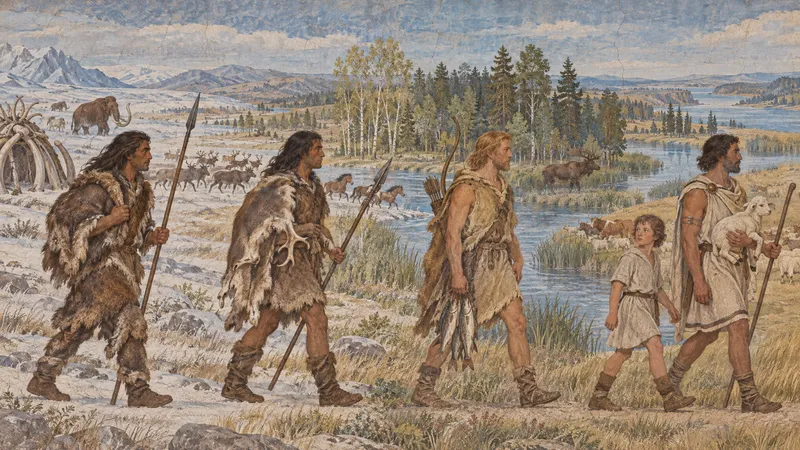
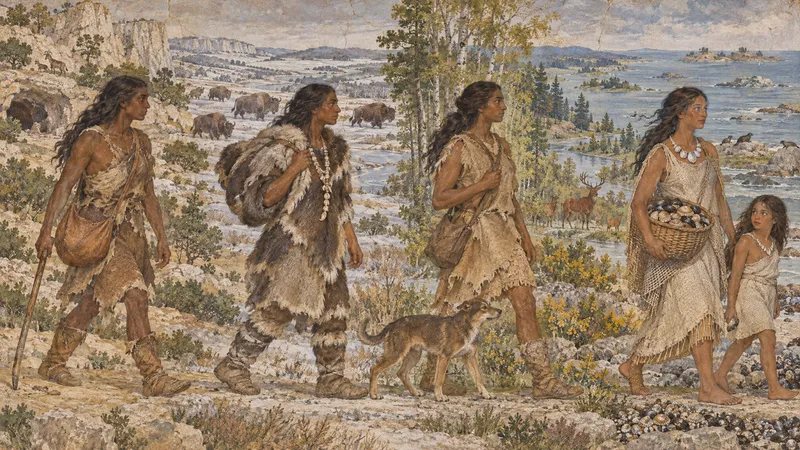
A sample person's two lines
Loading tool...
How one raw file gives both lines
Two parts of your genome pass down almost unchanged. The Y chromosome goes from a father to his sons, and mitochondrial DNA goes from a mother to all of her children, so each forms a single-line tree whose branches are haplogroups. A raw DNA export carries rows from both: Y-chromosome positions in a man's file, and mitochondrial positions in everyone's. This finder reads your file once for each line on our servers, places the Y-chromosome markers on the paternal tree and the mitochondrial variants, compared with the rCRS reference, on the maternal tree, and shows the two answers side by side.
Each line follows one ancestor in every generation: your father's father's father, and your mother's mother's mother. Two haplogroups name two threads among the thousands of ancestors you have a few centuries back, so neither is an ethnicity or a share of your ancestry, and the two can point to different parts of the world without either being wrong.
The limit is the file. A consumer chip reads a fixed selection of positions, so each answer goes as deep as the markers your export contains: a shallow branch usually means the chip stopped testing there, not that the line ends, and each result lists the branches below it that your file could not test. A woman's file has no Y chromosome to read, so her paternal line stays open (her father's or a brother's file carries it), while her maternal line reads exactly as a man's does. Runs need a free, email-verified account, and the uploaded file is deleted after the analysis.
Which raw DNA files it reads
It takes the raw data file that 23andMe, AncestryDNA and MyHeritage let every customer download, as text or CSV, the comma-separated exports of FamilyTreeDNA and Living DNA, and a whole-genome VCF from a sequencing kit. A .zip or .gz download can be chosen as it is, without unpacking it. One file serves both lines: 23andMe writes the mitochondrial rows as MT and AncestryDNA as chromosome 26, and both are read.
An array export can be up to 50 MB and a whole-genome VCF up to 1 GB. Not every export carries both lines: a woman's file has no Y rows, some exports leave the Y chromosome or the mitochondrial rows out, and where a line's rows are missing or too few, that line names no haplogroup rather than guessing one. The download guide below walks each company's steps to the file.
Reading the two answers together
Suppose a man's 23andMe file comes back as R‑Z2103 on the paternal line and H1 on the maternal one. The two calls are independent readings from different parts of the same file, so each is read on its own terms. R‑Z2103 is the deepest Y branch whose defining markers the chip tested; the branches below it that the file could not test are listed, and the men in the ancient DNA record who carried the same branch are mapped. H1 is a broad maternal branch, the usual depth for a chip, with the variants that placed it and the subclades the file could not reach.
The two lines often point to different places, because each follows a single ancestor per generation along its own path. A paternal branch common in one region beside a maternal branch common in another is an ordinary result, not a contradiction. Neither line says anything about the other ancestors at the same depth, and neither is a percentage: each tab opens its own line's timeline, map and the branches below it.
One pick, the same two readings
The paternal and maternal answers here are the same two analyses as the Y-DNA Clade Finder and the mtDNA haplogroup finder, run from one pick of your file. The file stays chosen while this tab is open, so the answers carry over: open either finder afterwards and its answer is already there, with no second upload. Each line keeps its own hourly allowance on our servers, so reading both here spends one run of each.
Going deeper takes a different test rather than a different reader. Past the depth a chip reaches, Y sequencing reads the paternal line and a full mitochondrial sequence the maternal one, and the branches each result marks as untested show whether that would add anything. The rest of your ancestry lives outside these two threads, in the genome Ancient Ancestry models from the same raw file.