
Notable Matches · Historical figures
The Africans of Colonial Mexico City
The Africans of Colonial Mexico City (c. 1450-1600 CE · Hospital Real de San Jose de los Naturales, Mexico City, Mexico): what the published ancient DNA shows, 3 sequenced genomes, and how close your own Global25 coordinates come. Free with every Ancestry Map.
The dossier
- Catalog tier
- Historical figures
- Period
- c. 1450-1600 CE
- Found
- Hospital Real de San Jose de los Naturales, Mexico City, Mexico
- Sex
- Male
- Sequenced genomes
- 3 (SJN001.SG.AG, SJN003.SG.AG, SJN002.SG.AG)
Who they were
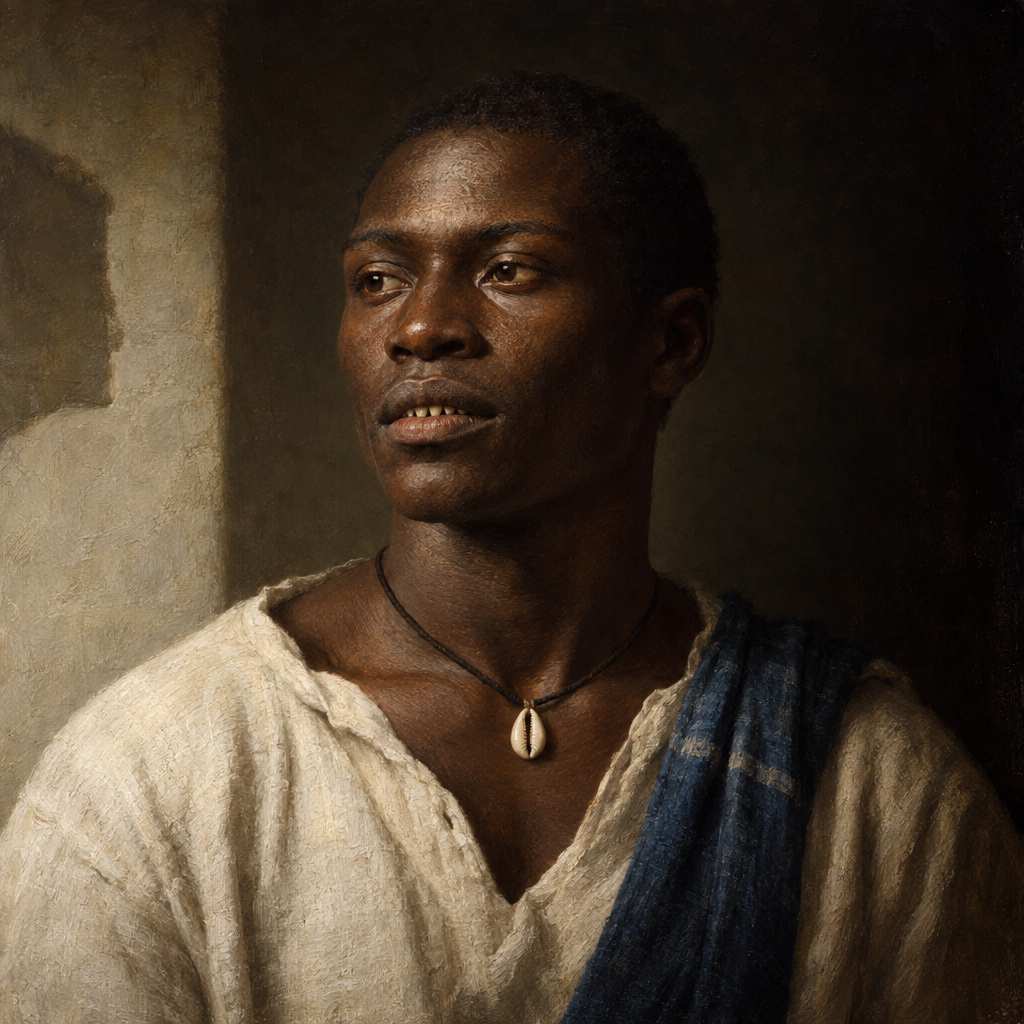
The Hospital Real de San Jose de los Naturales stood in the heart of early colonial Mexico City, and in its burial ground lay three men whose bones and teeth tell a story that documents never wrote. Strontium in their teeth shows all three were born in Africa; their upper incisors were filed in an African fashion, and they shared a sub-Saharan paternal lineage. One was genetically closest to the Mende of West Africa, two to the Wambo of southern Africa. One carried a West African strain of hepatitis B and another had yaws, and their skeletons bear the marks of heavy labour and injury. They were among the first generation of enslaved Africans brought across the Atlantic, and they died far from home in the early colonial city.
The genome-wide data behind this entry was published in Origin and Health Status of First-Generation Africans from Early Colonial Mexico.
How your distance is measured
Every Ancestry Map includes the free Notable Matches lens: your coordinates are compared to every sequenced member of every catalog entry, and the distance to the closest member is reported, a Euclidean distance in the same 25-dimensional space the Distance lens uses. Because these are a small group of real individuals, not a population average, distances naturally run larger than population distances. That is expected, not a poor result. And one thing is never claimed: a small distance means similar ancestry composition, not that the Africans of Colonial Mexico City are your ancestor. See how it looks in the live demo or read about Ancestry Map, the full Global25 report.
Questions
Who were the Africans of Colonial Mexico City?
The Africans of Colonial Mexico City (c. 1450-1600 CE, Hospital Real de San Jose de los Naturales, Mexico City, Mexico) are one of the Historical figures entries in our Notable Matches catalog, represented by 3 sequenced ancient genomes published in the study "Origin and Health Status of First-Generation Africans from Early Colonial Mexico".
What does "matching" the Africans of Colonial Mexico City mean?
Your Global25 coordinates are compared to the entry's sequenced members and the distance to the closest one is reported, a Euclidean distance in the same 25-dimensional reference space the Distance lens uses. A notable entry is one person or one small burial group, not a population average, so distances naturally run larger than population distances.
Are they my ancestor?
No, and no DNA test can show that. A small distance means your genome sits near theirs in a shared reference space: similar ancestry composition, not descent. Ancestrify never claims a notable individual is your ancestor or relative.
How do I see my own distance to the Africans of Colonial Mexico City?
Notable Matches is a free lens on every Ancestry Map, never sold separately. Order Ancestry Map, our Global25 analysis (29.99 EUR), and your report ranks your coordinates against the full catalog, with a portrait, dossier and map for every entry. The public demo shows the lens with example data.
More from the catalog
The catalog holds every published entry across three tiers. Browse the full Notable Matches directory. Nearby entries:
The Ming Dynasty Burials of Dasongshanc. 1400-1650 CE
The Báthory Family1550-1600 CE
Prince Christophorus Corvinus1499-1505 CE
The Saudeleur Dynasty of Nan Madolc. 1420-1710 CE
The Ottoman-Era Villagers of Çapalıbağc. 1300-1650 CE
Prince Johannes Corvinus1473-1504 CE
Bishop Peder Winstrup1605-1679 CE
The Swahili Merchants of Mtwapac. 1250-1600 CE
Philip Calvert1626-1682 CE
The Soldiers of the Reapers' War1652 CE
George Bähr1666-1738 CE
The Kronan Sailor1 June 1676 CE