
Notable Matches · Historical figures
The Ottoman-Era Villagers of Çapalıbağ
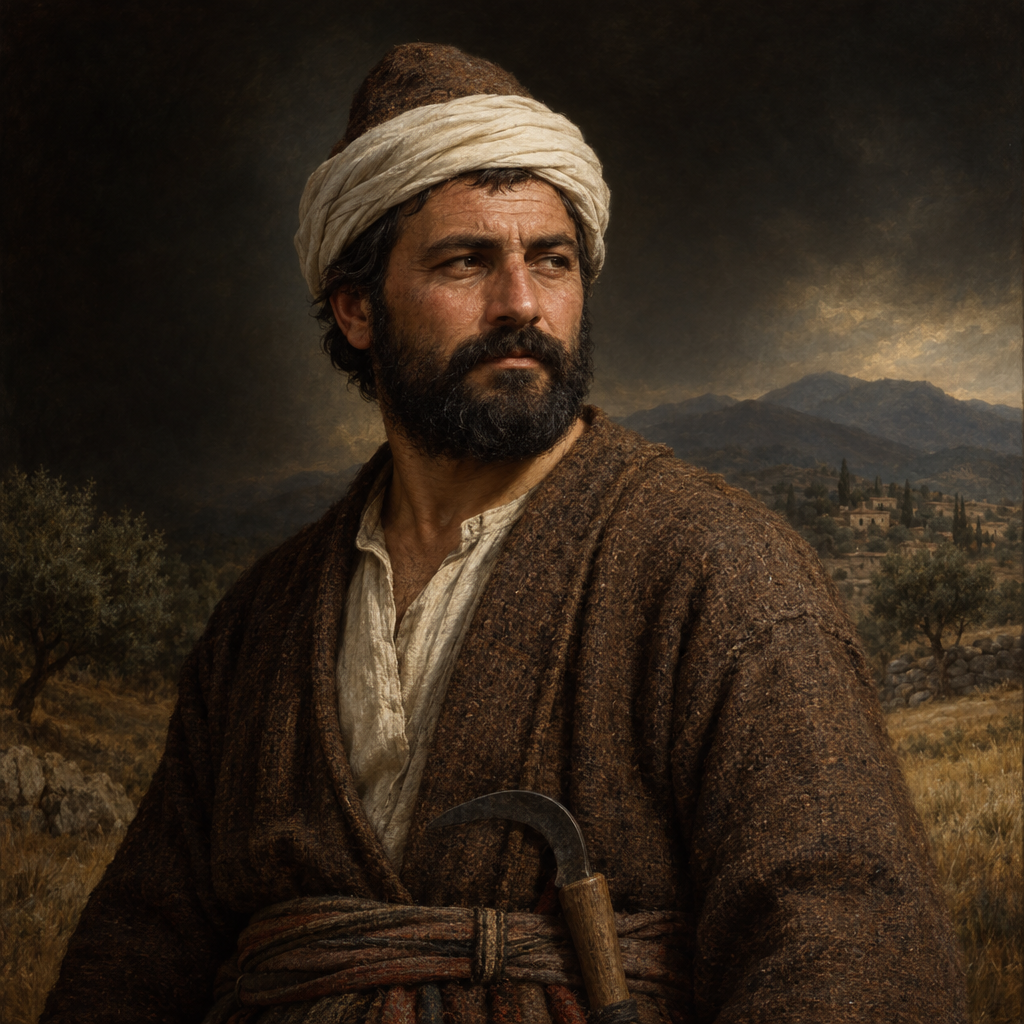
The Ottoman-Era Villagers of Çapalıbağ (c. 1300-1650 CE · Çapalıbağ, Turgut, Yatağan, Muğla, Turkey): what the published ancient DNA shows, 12 sequenced genomes, and how close your own Global25 coordinates come. Free with every Ancestry Map.
The dossier
- Catalog tier
- Historical figures
- Period
- c. 1300-1650 CE
- Found
- Çapalıbağ, Turgut, Yatağan, Muğla, Turkey
- Sequenced genomes
- 12 (I20329.AG, I20573.AG, I20322_d.AG, I20323.AG, I20324.AG, I20325.AG, I20326.AG, I20327.AG, I20572.AG, I20571.AG, I20570.AG, I20328.AG)
Who they were
Çapalıbağ, near Yatağan in Muğla, was salvage-excavated from 2016 ahead of lignite mining, and its Muslim burials, boards laid over the dead in Islamic orientation, became the headline case for how Turkic ancestry reached Anatolia. These villagers carry little Anatolian Neolithic ancestry: roughly half is Caucasus hunter-gatherer-related, about 13 percent Eastern European hunter-gatherer and about 18 percent East Eurasian, a component no Byzantine-era Anatolian has. The mixing dates to about twelve generations before their lifetimes, close to the Seljuq expansion of the eleventh century. One man carries the Siberian and Central Asian paternal lineage N1a1, and one boy the East Asian maternal lineage A17. In them, deep Anatolian and Central Asian inheritance meet.
The genome-wide data behind this entry was published in The genetic history of the Southern Arc: A bridge between West Asia and Europe.
How your distance is measured
Every Ancestry Map includes the free Notable Matches lens: your coordinates are compared to every sequenced member of every catalog entry, and the distance to the closest member is reported, a Euclidean distance in the same 25-dimensional space the Distance lens uses. Because these are a small group of real individuals, not a population average, distances naturally run larger than population distances. That is expected, not a poor result. And one thing is never claimed: a small distance means similar ancestry composition, not that the Ottoman-Era Villagers of Çapalıbağ are your ancestor. See how it looks in the live demo or read about Ancestry Map, the full Global25 report.
Questions
Who were the Ottoman-Era Villagers of Çapalıbağ?
The Ottoman-Era Villagers of Çapalıbağ (c. 1300-1650 CE, Çapalıbağ, Turgut, Yatağan, Muğla, Turkey) are one of the Historical figures entries in our Notable Matches catalog, represented by 12 sequenced ancient genomes published in the study "The genetic history of the Southern Arc: A bridge between West Asia and Europe".
What does "matching" the Ottoman-Era Villagers of Çapalıbağ mean?
Your Global25 coordinates are compared to the entry's sequenced members and the distance to the closest one is reported, a Euclidean distance in the same 25-dimensional reference space the Distance lens uses. A notable entry is one person or one small burial group, not a population average, so distances naturally run larger than population distances.
Are they my ancestor?
No, and no DNA test can show that. A small distance means your genome sits near theirs in a shared reference space: similar ancestry composition, not descent. Ancestrify never claims a notable individual is your ancestor or relative.
How do I see my own distance to the Ottoman-Era Villagers of Çapalıbağ?
Notable Matches is a free lens on every Ancestry Map, never sold separately. Order Ancestry Map, our Global25 analysis (29.99 EUR), and your report ranks your coordinates against the full catalog, with a portrait, dossier and map for every entry. The public demo shows the lens with example data.
More from the catalog
The catalog holds every published entry across three tiers. Browse the full Notable Matches directory. Nearby entries:
Prince Johannes Corvinus1473-1504 CE
Prince Christophorus Corvinus1499-1505 CE
The Swahili Merchants of Mtwapac. 1250-1600 CE
The Africans of Colonial Mexico Cityc. 1450-1600 CE
The Ming Dynasty Burials of Dasongshanc. 1400-1650 CE
The Báthory Family1550-1600 CE
The Saudeleur Dynasty of Nan Madolc. 1420-1710 CE
The Mongols of the Empirec. 1280-1440 CE
Bishop Peder Winstrup1605-1679 CE
Philip Calvert1626-1682 CE
The Soldiers of the Reapers' War1652 CE
George Bähr1666-1738 CE