
Notable Matches · Iconic discoveries
The Goths of the Vistula
The Goths of the Vistula (c. 100-400 CE · Masłomęcz, Hrubieszów, Poland): what the published ancient DNA shows, 12 sequenced genomes, and how close your own Global25 coordinates come. Free with every Ancestry Map.
The dossier
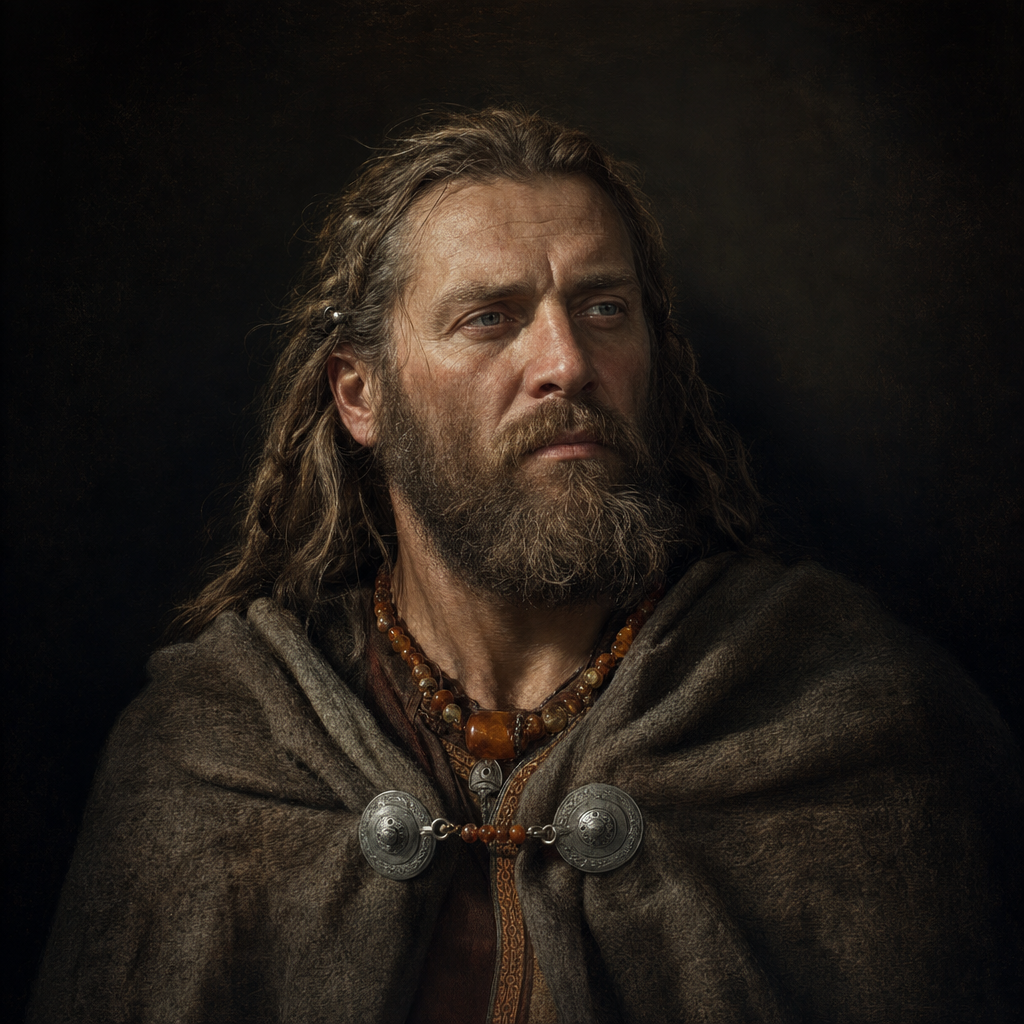
- Catalog tier
- Iconic discoveries
- Period
- c. 100-400 CE
- Found
- Masłomęcz, Hrubieszów, Poland
- Sequenced genomes
- 12 (PL065, PL083, PL077, PL052, PL053, PL046, PL054, PL069, PL063, PL062, PL067, PL082)
Who they were
Roman writers told of the Goths trekking from the Vistula toward the Black Sea, the people who would one day sack Rome itself and carve kingdoms from its western provinces. Archaeology finds them first in the Wielbark culture of Poland, whose cemeteries mix cremations and inhumations and pointedly exclude weapons from graves. These men and women of the Masłomęcz group lived along that migration road in the second and third centuries, a community whose Scandinavian-tinged ancestry records the legend's kernel of truth.
The genome-wide data behind this entry was published in Genetic history of East-Central Europe in the first millennium CE.
How your distance is measured
Every Ancestry Map includes the free Notable Matches lens: your coordinates are compared to every sequenced member of every catalog entry, and the distance to the closest member is reported, a Euclidean distance in the same 25-dimensional space the Distance lens uses. Because these are a small group of real individuals, not a population average, distances naturally run larger than population distances. That is expected, not a poor result. And one thing is never claimed: a small distance means similar ancestry composition, not that the Goths of the Vistula are your ancestor. See how it looks in the live demo or read about Ancestry Map, the full Global25 report.
Questions
Who were the Goths of the Vistula?
The Goths of the Vistula (c. 100-400 CE, Masłomęcz, Hrubieszów, Poland) are one of the Iconic discoveries entries in our Notable Matches catalog, represented by 12 sequenced ancient genomes published in the study "Genetic history of East-Central Europe in the first millennium CE".
What does "matching" the Goths of the Vistula mean?
Your Global25 coordinates are compared to the entry's sequenced members and the distance to the closest one is reported, a Euclidean distance in the same 25-dimensional reference space the Distance lens uses. A notable entry is one person or one small burial group, not a population average, so distances naturally run larger than population distances.
Are they my ancestor?
No, and no DNA test can show that. A small distance means your genome sits near theirs in a shared reference space: similar ancestry composition, not descent. Ancestrify never claims a notable individual is your ancestor or relative.
How do I see my own distance to the Goths of the Vistula?
Notable Matches is a free lens on every Ancestry Map, never sold separately. Order Ancestry Map, our Global25 analysis (29.99 EUR), and your report ranks your coordinates against the full catalog, with a portrait, dossier and map for every entry. The public demo shows the lens with example data.
More from the catalog
The catalog holds every published entry across three tiers. Browse the full Notable Matches directory. Nearby entries:
The Romans of Docleac. 100-400 CE
The Sarmatians of the Lower Danubec. 100-400 CE
The Sarmatians of the Great Hungarian Plain1st-4th century CE
The Log-Coffin People of Pang Maphac. 150-400 CE
The Romans of Viminacium1st-6th century CE
The People of Imperial Romec. 100-300 CE
The Greeks of Histria2nd-6th century CE
The Kangjuc. 200-400 CE
The Sky Caves of Mustangc. 400 BCE-700 CE
The Romans of Naissusc. 250-500 CE
The Ancient Highlanders of the Bogotá Altiplanoc. 100 BCE-800 CE
The Huns of the Tian Shanc. 150-600 CE