
Notable Matches · Iconic discoveries
The Vinča Culture
The Vinča Culture (c. 5300–4500 BCE · Vinča-Belo Brdo, Serbia): published ancient DNA, 5 sequenced genomes, and how close your own Global25 coordinates come — free with every Ancestrify G25 report.
The dossier
- Catalog tier
- Iconic discoveries
- Period
- c. 5300–4500 BCE
- Found
- Vinča-Belo Brdo, Serbia
- Sequenced genomes
- 5 (VC3-2, I1896, I1889, I1895, I1887)
Who they were
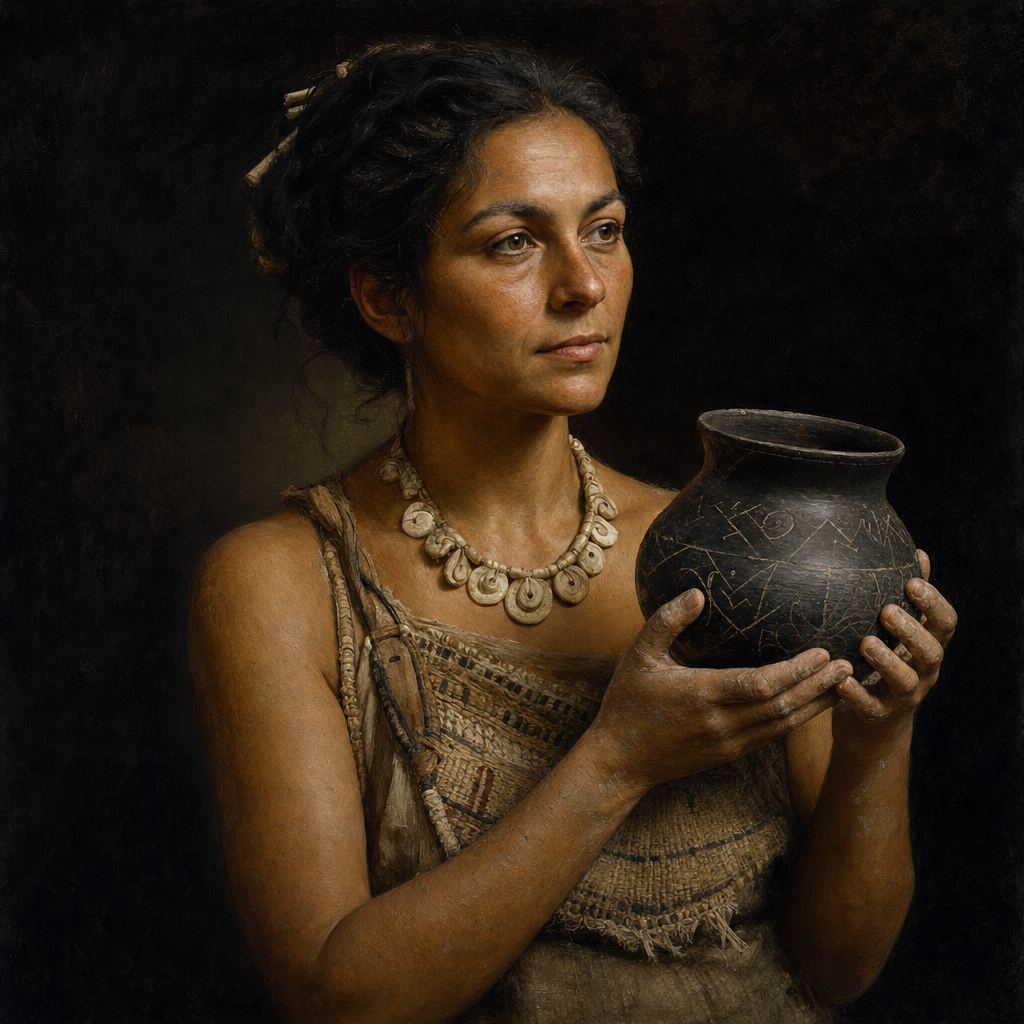
On the Danube at Vinča-Belo Brdo grew one of prehistoric Europe's largest settlements — the heart of the Vinča culture, whose potters scratched signs so orderly that some call them the world's first flirtation with writing, a thousand years before Sumer. Their smiths worked copper before almost anyone on Earth. These are the Balkans at the height of Old Europe.
The genome-wide data behind this entry was published in The genomic history of Southeastern Europe.
How your distance is measured
Every Ancestrify Global25 report includes the free Notable Matches lens: your coordinates are compared to every sequenced member of every catalog entry, and the distance to the closest member is reported — a Euclidean distance in the same 25-dimensional space the Distance lens uses. Because these are a small group of real individuals, not a population average, distances naturally run larger than population distances — that is expected, not a poor result. And one thing is never claimed: a small distance means similar ancestry composition, not that the Vinča Culture are your ancestor. See how it looks in the live demo or read about the full G25 analysis.
Questions
Who were the Vinča Culture?
The Vinča Culture (c. 5300–4500 BCE, Vinča-Belo Brdo, Serbia) are one of the Iconic discoveries entries in our Notable Matches catalog, represented by 5 sequenced ancient genomes published in the study "The genomic history of Southeastern Europe".
What does "matching" the Vinča Culture mean?
Your Global25 coordinates are compared to the entry's sequenced members and the distance to the closest one is reported — a Euclidean distance in the same 25-dimensional reference space the Distance lens uses. A notable entry is one person or one small burial group, not a population average, so distances naturally run larger than population distances.
Are they my ancestor?
No — and no DNA test can show that. A small distance means your genome sits near theirs in a shared reference space: similar ancestry composition, not descent. Ancestrify never claims a notable individual is your ancestor or relative.
How do I see my own distance to the Vinča Culture?
Notable Matches is a free lens on every Ancestrify Global25 report — never sold separately. Order the G25 analysis (29.99 EUR), and your report ranks your coordinates against the full catalog, with a portrait, dossier and map for every entry. The public demo shows the lens with example data.
More from the catalog
The catalog holds every published entry across three tiers — browse the full Notable Matches directory. Nearby entries:
The Ertebølle Fisher-Foragersc. 5400–4300 BCE
The Takarkori Mummiesc. 5000 BCE
The First Farmers of the Linearbandkeramikc. 5500–4900 BCE
The Varna Gold Elitec. 4600 BCE
The Neolithic Peloponnesiansc. 6000–3200 BCE
The Fall of Yunatsitec. 4500–4400 BCE
The Copper Lords of Gumelnițac. 4500–4250 BCE
The Tren Cave Dwellersc. 4250–4150 BCE
The First Farmers of Starčevoc. 6200–5500 BCE
The Cucuteni–Trypillia Mega-Settlementsc. 4300–3500 BCE
The Shum Laka Childrenc. 6000 BCE and 1000 BCE
The Hòabìnhian of Pha Faenc. 6000 BCE