
Notable Matches · Deep time
Goyet Q116-1
Goyet Q116-1 (c. 33,000 BCE · Goyet Caves, Namur, Belgium): what the published ancient DNA shows, Y-DNA C1a, mtDNA M, one sequenced genome, and how close your own Global25 coordinates come. Free with every Ancestry Map.
The dossier
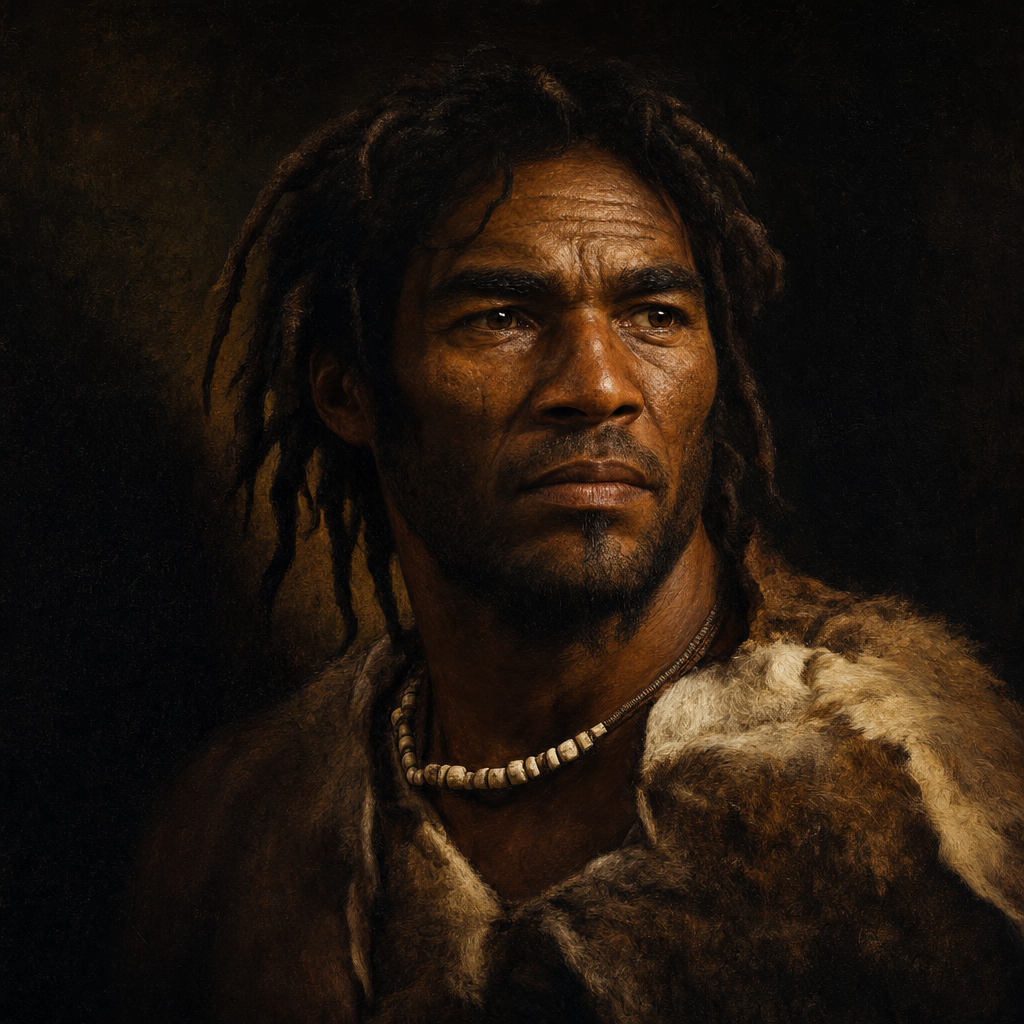
- Catalog tier
- Deep time
- Period
- c. 33,000 BCE
- Found
- Goyet Caves, Namur, Belgium
- Sex
- Male
- Y-DNA haplogroup
- C1a
- mtDNA haplogroup
- M
- Sequenced genomes
- 1 (GoyetQ116-1.AG)
Who Goyet Q116-1 was
From the third cavern of the Goyet caves, above the little river Samson, comes one of the oldest genomes of Ice Age Europe: a man of the Aurignacian, the culture of Europe's first great cave painters, who lived some thirty-five thousand years ago. He carried a maternal lineage all but vanished from Europe today. His people's ancestry then disappears from the record for fifteen thousand years, invisible through the long age of the mammoth hunters, before resurfacing, after the worst of the last Ice Age, in the Magdalenian reindeer hunters of western Europe, including one buried in the very same cave. Later research would name a whole strand of deep European ancestry after him.
The genome-wide data behind this entry was published in The genetic history of Ice Age Europe.
How your distance is measured
Every Ancestry Map includes the free Notable Matches lens: your coordinates are compared to every sequenced member of every catalog entry, and the distance to the closest member is reported, a Euclidean distance in the same 25-dimensional space the Distance lens uses. Because this is a single real individual, not a population average, distances naturally run larger than population distances. That is expected, not a poor result. And one thing is never claimed: a small distance means similar ancestry composition, not that Goyet Q116-1 is your ancestor. See how it looks in the live demo or read about Ancestry Map, the full Global25 report.
Questions
Who was Goyet Q116-1?
Goyet Q116-1 (c. 33,000 BCE, Goyet Caves, Namur, Belgium) is one of the Deep time entries in our Notable Matches catalog, represented by one sequenced ancient genome published in the study "The genetic history of Ice Age Europe".
What does "matching" Goyet Q116-1 mean?
Your Global25 coordinates are compared to the entry's sequenced members and the distance to the closest one is reported, a Euclidean distance in the same 25-dimensional reference space the Distance lens uses. A notable entry is one person or one small burial group, not a population average, so distances naturally run larger than population distances.
Is Goyet Q116-1 my ancestor?
No, and no DNA test can show that. A small distance means your genome sits near this individual's in a shared reference space: similar ancestry composition, not descent. Ancestrify never claims a notable individual is your ancestor or relative.
How do I see my own distance to Goyet Q116-1?
Notable Matches is a free lens on every Ancestry Map, never sold separately. Order Ancestry Map, our Global25 analysis (29.99 EUR), and your report ranks your coordinates against the full catalog, with a portrait, dossier and map for every entry. The public demo shows the lens with example data.
More from the catalog
The catalog holds every published entry across three tiers. Browse the full Notable Matches directory. Nearby entries:
The Peștera Muierii Womanc. 33,000 BCE
The Salkhit Womanc. 32,000 BCE
The Sunghir Burialc. 32,000 BCE
Kostenki Manc. 36,000 BCE
The Dolní Věstonice Triple Burialc. 29,000 BCE
Tianyuan Manc. 38,000 BCE
Oase 1c. 38,000 BCE
Ust'-Ishim Manc. 43,000 BCE
The Bacho Kiro Pioneersc. 43,000 BCE
The Ranis Pioneersc. 45,000-41,000 BCE
Mal'ta Boyc. 22,500 BCE
The Zlatý Kůň Womanc. 43,000 BCE