
Notable Matches · Iconic discoveries
The Christians of Norman Segesta
The Christians of Norman Segesta (c. 1120-1320 CE · Segesta, Sicily, Italy): what the published ancient DNA shows, 8 sequenced genomes, and how close your own Global25 coordinates come. Free with every Ancestry Map.
The dossier
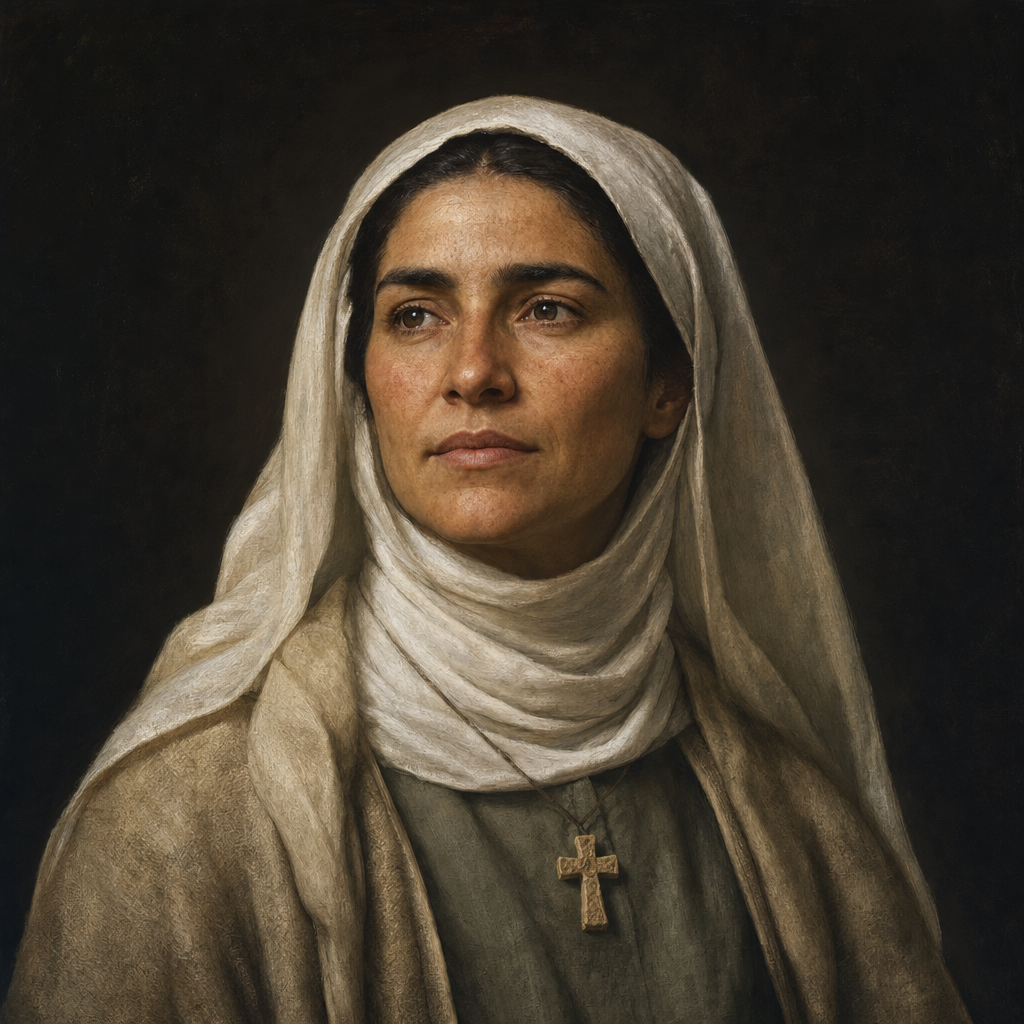
- Catalog tier
- Iconic discoveries
- Period
- c. 1120-1320 CE
- Found
- Segesta, Sicily, Italy
- Sequenced genomes
- 8 (SGBN17, SGBN23, SGBN22, SGBN12, SGBN19, SGBN20, SGBN10, SGBN24)
Who they were
Sixty metres from the Muslim graves of Segesta, beside a church raised around 1200 CE, a Christian community buried its dead in stone tombs, supine with folded arms, in the new Sicily of Norman and Swabian kings. Their genomes plot firmly among Europeans, and against every easy assumption about medieval Sicily's famous mixing, they show no detected intermarriage with the Muslim families buried within sight of their church. Two communities, one hilltop, the same bread and oil from the same fields (the isotopes in their bones are nearly identical), yet two separate ancestries, side by side. Few places capture so precisely how the medieval Mediterranean could share everything but descent.
The genome-wide data behind this entry was published in Multi-proxy bioarchaeological analysis of skeletal remains shows genetic discontinuity in a Medieval Sicilian community.
How your distance is measured
Every Ancestry Map includes the free Notable Matches lens: your coordinates are compared to every sequenced member of every catalog entry, and the distance to the closest member is reported, a Euclidean distance in the same 25-dimensional space the Distance lens uses. Because these are a small group of real individuals, not a population average, distances naturally run larger than population distances. That is expected, not a poor result. And one thing is never claimed: a small distance means similar ancestry composition, not that the Christians of Norman Segesta are your ancestor. See how it looks in the live demo or read about Ancestry Map, the full Global25 report.
Questions
Who were the Christians of Norman Segesta?
The Christians of Norman Segesta (c. 1120-1320 CE, Segesta, Sicily, Italy) are one of the Iconic discoveries entries in our Notable Matches catalog, represented by 8 sequenced ancient genomes published in the study "Multi-proxy bioarchaeological analysis of skeletal remains shows genetic discontinuity in a Medieval Sicilian community".
What does "matching" the Christians of Norman Segesta mean?
Your Global25 coordinates are compared to the entry's sequenced members and the distance to the closest one is reported, a Euclidean distance in the same 25-dimensional reference space the Distance lens uses. A notable entry is one person or one small burial group, not a population average, so distances naturally run larger than population distances.
Are they my ancestor?
No, and no DNA test can show that. A small distance means your genome sits near theirs in a shared reference space: similar ancestry composition, not descent. Ancestrify never claims a notable individual is your ancestor or relative.
How do I see my own distance to the Christians of Norman Segesta?
Notable Matches is a free lens on every Ancestry Map, never sold separately. Order Ancestry Map, our Global25 analysis (29.99 EUR), and your report ranks your coordinates against the full catalog, with a portrait, dossier and map for every entry. The public demo shows the lens with example data.
More from the catalog
The catalog holds every published entry across three tiers. Browse the full Notable Matches directory. Nearby entries:
The Medieval Bosnians13th-15th century CE
The Jews of Medieval Erfurtc. 1270-1400 CE
The Norse of Greenlandc. 950-1400 CE
The Jews of Tàrrega1348 CE
The Black Death Londonersc. 1330-1360 CE
The Chumash of Santa Rosa Islandc. 1250-1450 CE
The Muslims of Segestac. 870-1170 CE
The Tiwanaku of the Akapanac. 870-1150 CE
The Medieval Docleansc. 800-1100 CE
The Gaels of Kilteasheenc. 700-1300 CE
The Retainers of Machu Picchuc. 1420-1530 CE
The Latte Builders of the Marianasc. 1250-1650 CE