
Notable Matches · Iconic discoveries
The Norse of Greenland
The Norse of Greenland (c. 950-1400 CE · Brattahlid and the Norse settlements, Greenland): what the published ancient DNA shows, 9 sequenced genomes, and how close your own Global25 coordinates come. Free with every Ancestry Map.
The dossier
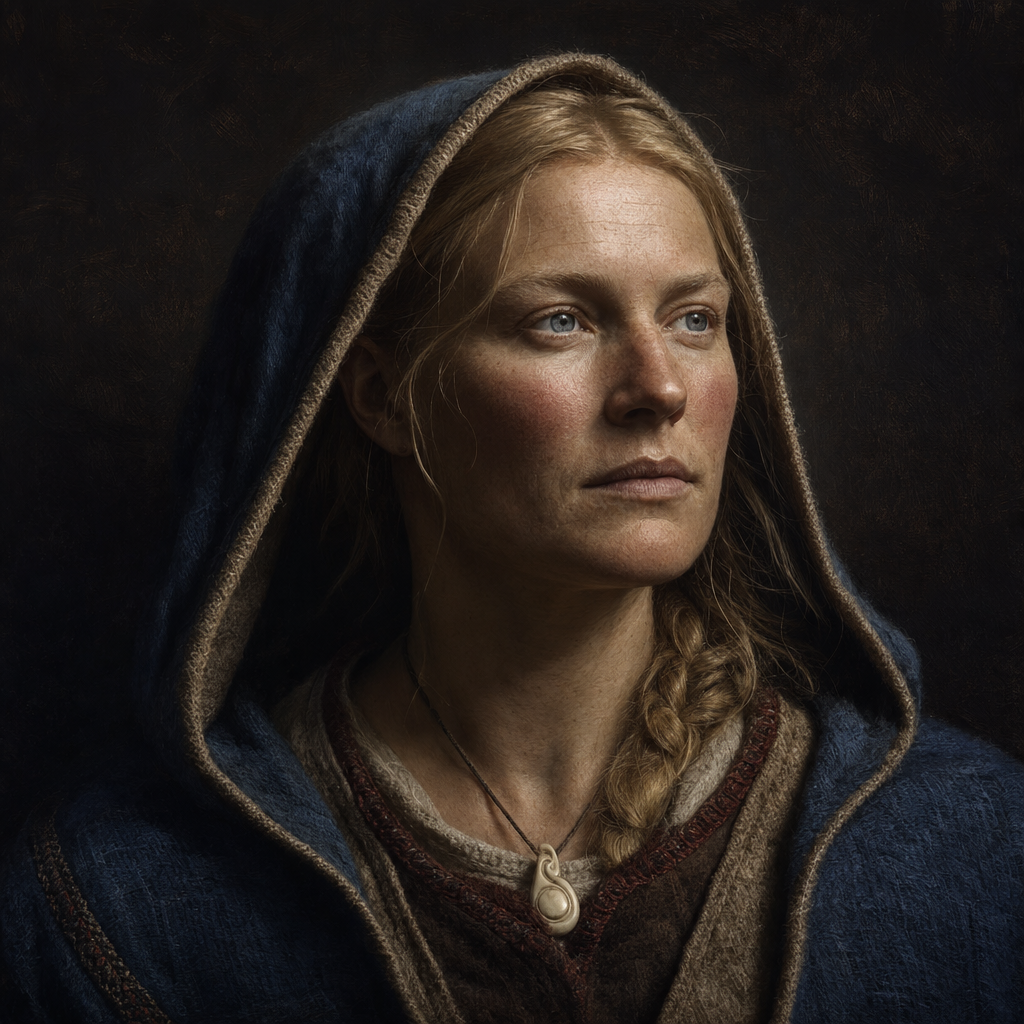
- Catalog tier
- Iconic discoveries
- Period
- c. 950-1400 CE
- Found
- Brattahlid and the Norse settlements, Greenland
- Sequenced genomes
- 9 (VK184.SG, VK187.SG, VK183.SG, VK186.SG, VK190.SG, VK75.SG, VK6.SG, VK513.SG, VK1.SG)
Who they were
Around 985 CE Erik the Red led settler ships from Iceland to the fjords of southwest Greenland, and for over four centuries a Norse world clung to the edge of the known earth: church farms, hayfields and hunting grounds that paid for themselves in walrus ivory. These men and women were buried in the churchyards of that world: at Erik's own Brattahlid, at the farm of Innoqquasaq, and out in the Western Settlement at Sandnes, from the first generations to the colony's final century. Their genomes blend Norwegian settlers with people of the British Isles, like Iceland's founders, and show no trace of the Inuit neighbours with whom they shared the island. After a last recorded wedding at Hvalsey church in 1408, the Norse of Greenland vanish from history.
The genome-wide data behind this entry was published in Population genomics of the Viking world.
How your distance is measured
Every Ancestry Map includes the free Notable Matches lens: your coordinates are compared to every sequenced member of every catalog entry, and the distance to the closest member is reported, a Euclidean distance in the same 25-dimensional space the Distance lens uses. Because these are a small group of real individuals, not a population average, distances naturally run larger than population distances. That is expected, not a poor result. And one thing is never claimed: a small distance means similar ancestry composition, not that the Norse of Greenland are your ancestor. See how it looks in the live demo or read about Ancestry Map, the full Global25 report.
Questions
Who were the Norse of Greenland?
The Norse of Greenland (c. 950-1400 CE, Brattahlid and the Norse settlements, Greenland) are one of the Iconic discoveries entries in our Notable Matches catalog, represented by 9 sequenced ancient genomes published in the study "Population genomics of the Viking world".
What does "matching" the Norse of Greenland mean?
Your Global25 coordinates are compared to the entry's sequenced members and the distance to the closest one is reported, a Euclidean distance in the same 25-dimensional reference space the Distance lens uses. A notable entry is one person or one small burial group, not a population average, so distances naturally run larger than population distances.
Are they my ancestor?
No, and no DNA test can show that. A small distance means your genome sits near theirs in a shared reference space: similar ancestry composition, not descent. Ancestrify never claims a notable individual is your ancestor or relative.
How do I see my own distance to the Norse of Greenland?
Notable Matches is a free lens on every Ancestry Map, never sold separately. Order Ancestry Map, our Global25 analysis (29.99 EUR), and your report ranks your coordinates against the full catalog, with a portrait, dossier and map for every entry. The public demo shows the lens with example data.
More from the catalog
The catalog holds every published entry across three tiers. Browse the full Notable Matches directory. Nearby entries:
The Muslims of Segestac. 870-1170 CE
The Tiwanaku of the Akapanac. 870-1150 CE
The Medieval Docleansc. 800-1100 CE
The Gaels of Kilteasheenc. 700-1300 CE
The Christians of Norman Segestac. 1120-1320 CE
The Christians of Sigtunac. 900-1050 CE
The Taíno Woman of Preacher's Cavec. 950 CE
The Vikingsc. 750-1050 CE
The Settlers of Icelandc. 870-1100 CE
The Hungarian Conquerors10th century CE
The Ancient Puerto Ricansc. 550-1350 CE
The Guanchesc. 300-1500 CE