
Notable Matches · Iconic discoveries
The Koban Culture
The Koban Culture (c. 800-400 BCE · Zayukovo-3, Baksan Gorge, Kabardino-Balkaria, Russia): what the published ancient DNA shows, 3 sequenced genomes, and how close your own Global25 coordinates come. Free with every Ancestry Map.
The dossier
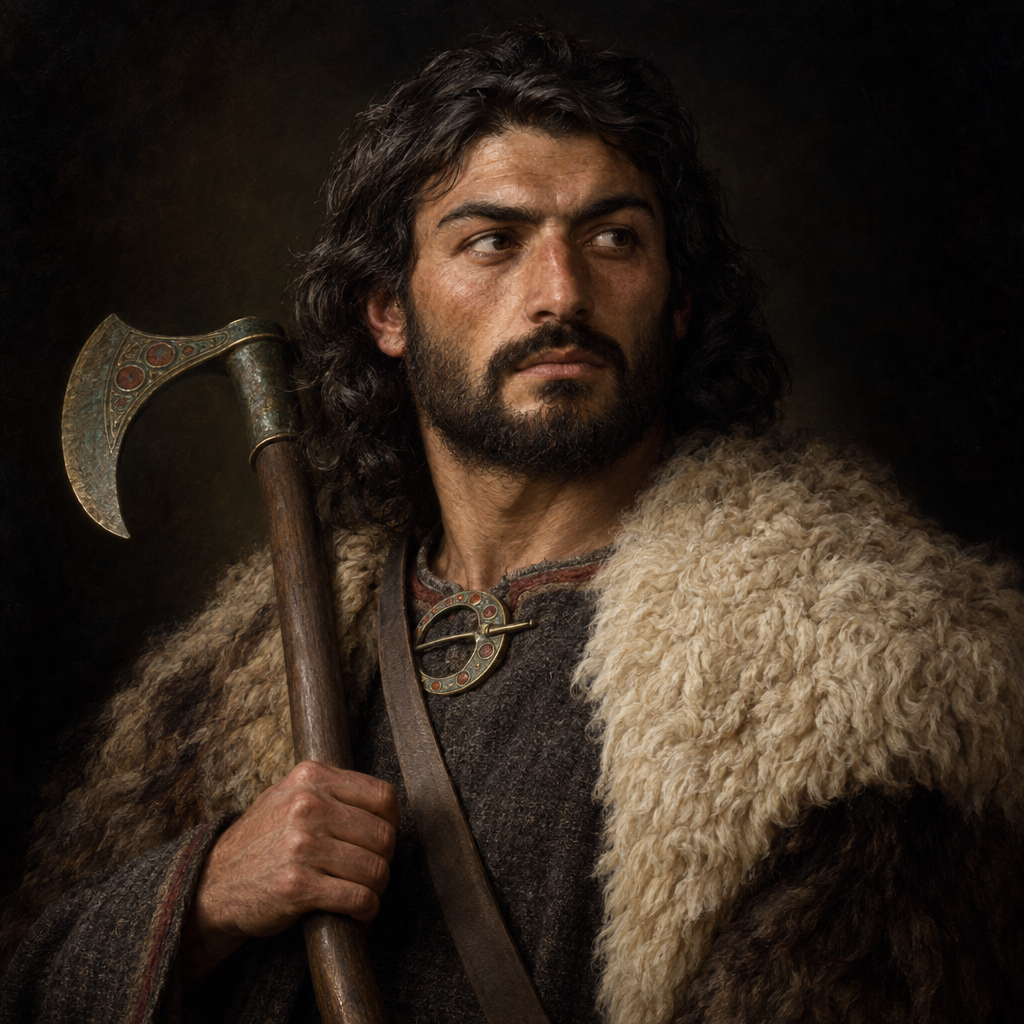
- Catalog tier
- Iconic discoveries
- Period
- c. 800-400 BCE
- Found
- Zayukovo-3, Baksan Gorge, Kabardino-Balkaria, Russia
- Sequenced genomes
- 3 (lib11al, lib9al, lib7al)
Who they were
The Koban culture flourished in the North Caucasus from about 1200 to 350 BCE and takes its name from finds made at the village of Koban in 1869: bronze battle-axes, daggers and ornaments inlaid with enamel, of which the Tli cemetery alone yielded more than five hundred burials. These three people were buried at Zayukovo-3 in the Baksan Gorge of Kabardino-Balkaria in the Early Iron Age. Their genomes sit closest to the Bronze Age peoples of the Caucasus, the Kura-Araxes and Maykop worlds, and to the later Alans, with a measure of Scythian steppe input. Their G2a1 and R1b paternal lineages are still shared with Ossetians, Balkars and Karachays today, a bridge between the Bronze and Iron Ages of the mountains.
The genome-wide data behind this entry was published in Koban culture genome-wide and archeological data open the bridge between Bronze and Iron Ages in the North Caucasus.
How your distance is measured
Every Ancestry Map includes the free Notable Matches lens: your coordinates are compared to every sequenced member of every catalog entry, and the distance to the closest member is reported, a Euclidean distance in the same 25-dimensional space the Distance lens uses. Because these are a small group of real individuals, not a population average, distances naturally run larger than population distances. That is expected, not a poor result. And one thing is never claimed: a small distance means similar ancestry composition, not that the Koban Culture are your ancestor. See how it looks in the live demo or read about Ancestry Map, the full Global25 report.
Questions
Who were the Koban Culture?
The Koban Culture (c. 800-400 BCE, Zayukovo-3, Baksan Gorge, Kabardino-Balkaria, Russia) are one of the Iconic discoveries entries in our Notable Matches catalog, represented by 3 sequenced ancient genomes published in the study "Koban culture genome-wide and archeological data open the bridge between Bronze and Iron Ages in the North Caucasus".
What does "matching" the Koban Culture mean?
Your Global25 coordinates are compared to the entry's sequenced members and the distance to the closest one is reported, a Euclidean distance in the same 25-dimensional reference space the Distance lens uses. A notable entry is one person or one small burial group, not a population average, so distances naturally run larger than population distances.
Are they my ancestor?
No, and no DNA test can show that. A small distance means your genome sits near theirs in a shared reference space: similar ancestry composition, not descent. Ancestrify never claims a notable individual is your ancestor or relative.
How do I see my own distance to the Koban Culture?
Notable Matches is a free lens on every Ancestry Map, never sold separately. Order Ancestry Map, our Global25 analysis (29.99 EUR), and your report ranks your coordinates against the full catalog, with a portrait, dossier and map for every entry. The public demo shows the lens with example data.
More from the catalog
The catalog holds every published entry across three tiers. Browse the full Notable Matches directory. Nearby entries:
The Phoenicians of Tharrosc. 700-470 BCE
The Phoenicians of Motyac. 670-450 BCE
The Phoenicians of Achzivc. 900-400 BCE
The Salt Lords of Hallstattc. 750-400 BCE
The Mummies of Abusir el-Meleqc. 775-560 BCE
The Picenes of Novilarac. 725-625 BCE
The Paeoniansc. 1200-300 BCE
The Etruscansc. 800-100 BCE
The Vix Burial Complexc. 650-200 BCE
The Dauniansc. 630-340 BCE
The Soldiers of Himera480 BCE
The Urartiansc. 850-600 BCE