
Denisovans13 min
The Harbin Cranium: Putting a Face on the Denisovans
Ancient proteins and mitochondrial DNA from dental calculus identify the near-complete Harbin cranium from northeastern China as a Denisovan.

Methodology deep-dives, population spotlights, and engineering notes from the Ancestrify team, qpAdm modelling, ancient DNA panels, and how genetic ancestry analysis really works.
8 stories
Ancient proteins and mitochondrial DNA from dental calculus identify the near-complete Harbin cranium from northeastern China as a Denisovan.

Picuris Pueblo initiated a genomic study of its own ancestors, showing continuity across a millennium and a firm link to Chaco Canyon.

What are the ancient origins of Albanian DNA? A 2026 ancient DNA study traces Albanian ancestry from Bronze and Iron Age West Balkan (Illyrian-era) groups through Roman and medieval admixture, with the Slavic input measured. The eras, the sources, and how to test your own file.

Ancient Balkan DNA reveals Roman-era Anatolian mobility, mixed late-antique migrations and lasting ancestry linked to Slavic expansion.

A 2023 Science study analyzed 161 languages, dated the Indo-European root to about 8,120 years ago, and proposed a debated hybrid origin.
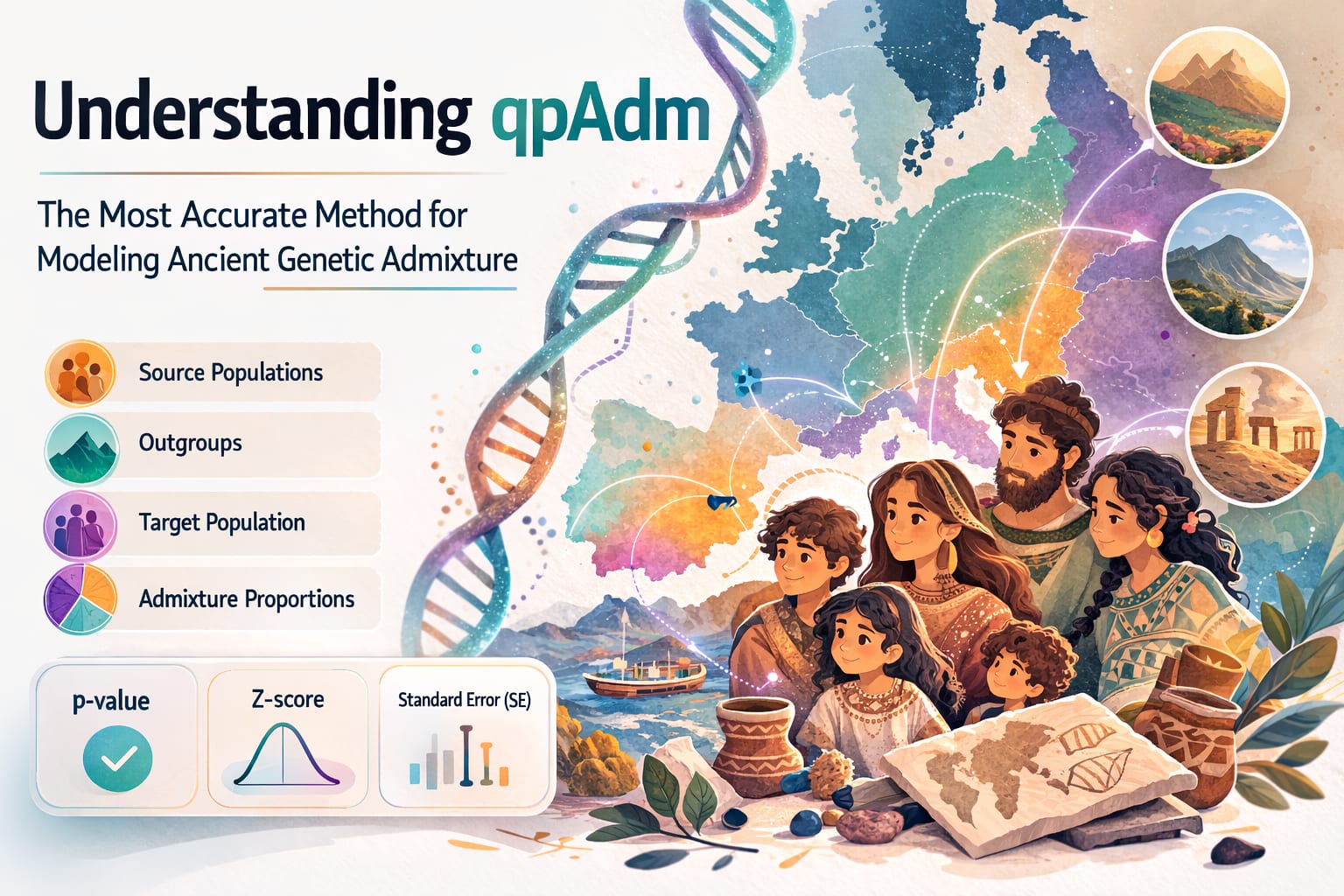
The method, for readers who want the maths: what qpAdm computes, what the p-value, standard error and z-score each mean, why outgroup choice decides whether a model is worth anything, and how to read a rejection with a worked example.

A 2026 study of 102 Deep Maniots finds unusual paternal isolation, Bronze Age-linked lineages, medieval founder effects and diverse maternal ancestry.
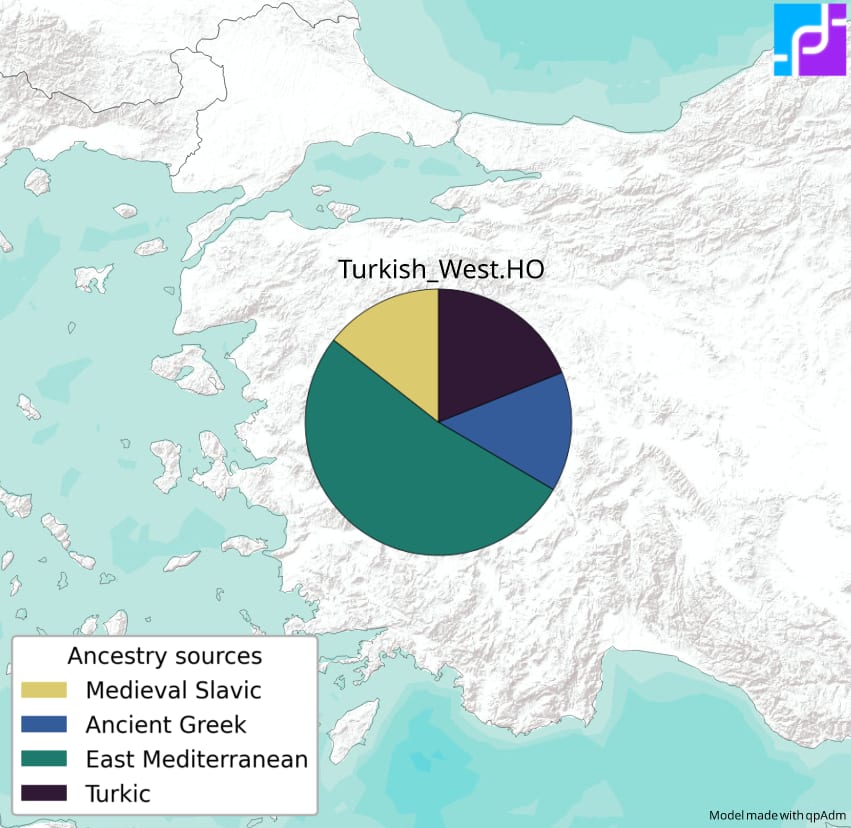
qpAdm modeling shows modern Anatolian Turks carrying ancestry from Neolithic farmers, Yamnaya, and later Iron Age to medieval populations, reflecting a complex mix of local and incoming ancestries.