
Notable Matches · Iconic discoveries
The Kofun-Period Japanese of Iwade
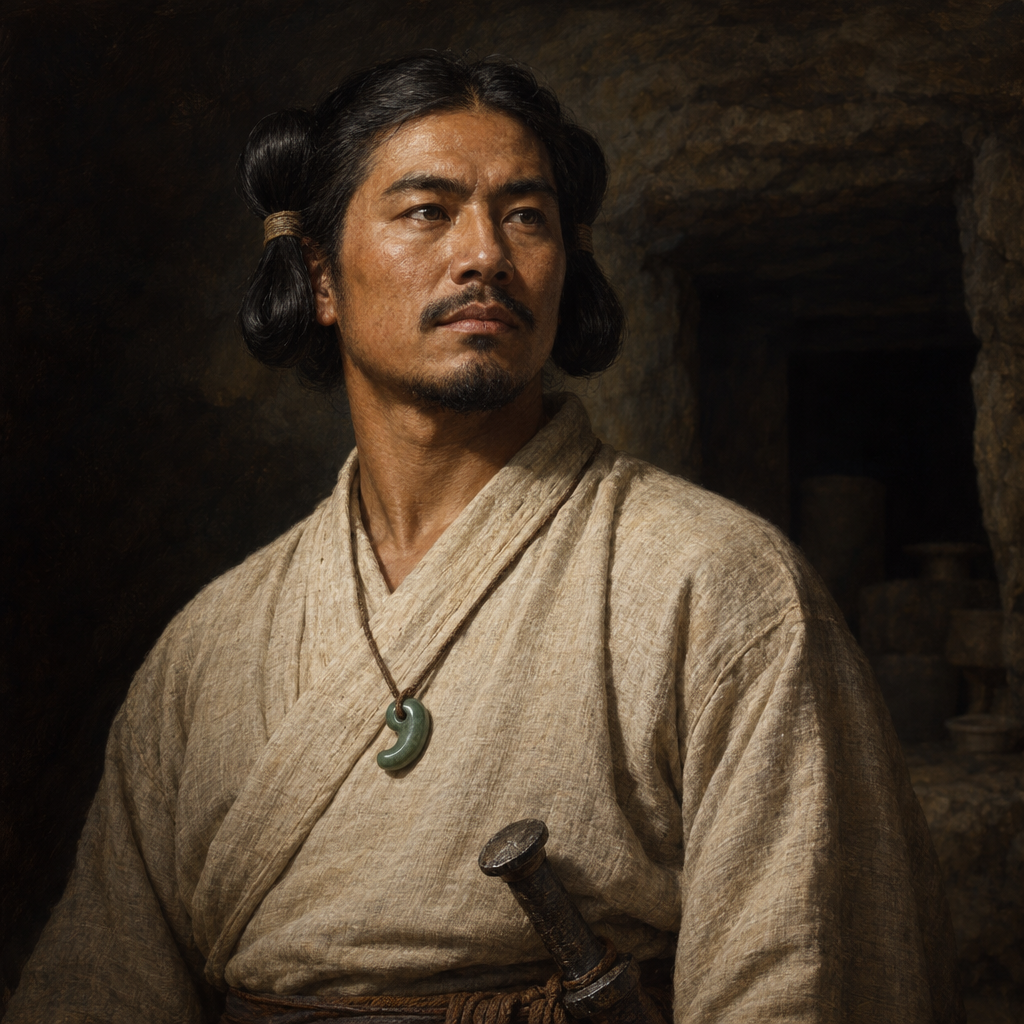
The Kofun-Period Japanese of Iwade (c. 570-630 CE · Iwade cave tombs, Kanazawa, Ishikawa Prefecture, Japan): what the published ancient DNA shows, 3 sequenced genomes, and how close your own Global25 coordinates come. Free with every Ancestry Map.
The dossier
- Catalog tier
- Iconic discoveries
- Period
- c. 570-630 CE
- Found
- Iwade cave tombs, Kanazawa, Ishikawa Prefecture, Japan
- Sequenced genomes
- 3 (JpIw31.SG, JpIw32.SG, JpIw33.SG)
Who they were
The Kofun period takes its name from the keyhole-shaped burial mounds raised for the emerging state elite of Japan, though the three people gathered here were laid in rock-cut cave tombs at Iwade, near Kanazawa, between about 570 and 630 CE. Their genomes helped rewrite the story of Japanese origins. The old dual-structure model, indigenous Jomon foragers overlaid by Yayoi-period migrants, became a three-way one: Jomon, then Yayoi-period arrivals from the Korean peninsula, then a further Kofun-period influx of East Asian ancestry related to Han-Chinese-like populations, which turned out to be the largest single component of modern Japanese ancestry. One of the three, a man, carried the paternal line O2a2b1 and the maternal line B5a2a1b. Only three individuals, but they anchor a chapter of the archipelago's genetic history.
The genome-wide data behind this entry was published in Ancient genomics reveals tripartite origins of Japanese populations.
How your distance is measured
Every Ancestry Map includes the free Notable Matches lens: your coordinates are compared to every sequenced member of every catalog entry, and the distance to the closest member is reported, a Euclidean distance in the same 25-dimensional space the Distance lens uses. Because these are a small group of real individuals, not a population average, distances naturally run larger than population distances. That is expected, not a poor result. And one thing is never claimed: a small distance means similar ancestry composition, not that the Kofun-Period Japanese of Iwade are your ancestor. See how it looks in the live demo or read about Ancestry Map, the full Global25 report.
Questions
Who were the Kofun-Period Japanese of Iwade?
The Kofun-Period Japanese of Iwade (c. 570-630 CE, Iwade cave tombs, Kanazawa, Ishikawa Prefecture, Japan) are one of the Iconic discoveries entries in our Notable Matches catalog, represented by 3 sequenced ancient genomes published in the study "Ancient genomics reveals tripartite origins of Japanese populations".
What does "matching" the Kofun-Period Japanese of Iwade mean?
Your Global25 coordinates are compared to the entry's sequenced members and the distance to the closest one is reported, a Euclidean distance in the same 25-dimensional reference space the Distance lens uses. A notable entry is one person or one small burial group, not a population average, so distances naturally run larger than population distances.
Are they my ancestor?
No, and no DNA test can show that. A small distance means your genome sits near theirs in a shared reference space: similar ancestry composition, not descent. Ancestrify never claims a notable individual is your ancestor or relative.
How do I see my own distance to the Kofun-Period Japanese of Iwade?
Notable Matches is a free lens on every Ancestry Map, never sold separately. Order Ancestry Map, our Global25 analysis (29.99 EUR), and your report ranks your coordinates against the full catalog, with a portrait, dossier and map for every entry. The public demo shows the lens with example data.
More from the catalog
The catalog holds every published entry across three tiers. Browse the full Notable Matches directory. Nearby entries:
The Lovelock Cave Peoplec. 150-1400 CE
The Visigoths of Iberiac. 480-770 CE
The Anglo-Saxonsc. 450-750 CE
The Early Bavariansc. 500-600 CE
The Pictsc. 420-630 CE
The Merovingians of Koksijdec. 620-750 CE
The Langobards of Collegnoc. 640-750 CE
The Gepid Kingdomc. 450-560 CE
The Early Slavsc. 600-900 CE
The Medieval Venosans8th century CE
The Tylos-Era Bahrainisc. 300-650 CE
The Moche of Huaca Cao Viejoc. 200-600 CE