
Notable Matches · Iconic discoveries
The Picts
The Picts (c. 420-630 CE · Lundin Links, Fife, Scotland): what the published ancient DNA shows, 5 sequenced genomes, and how close your own Global25 coordinates come. Free with every Ancestry Map.
The dossier
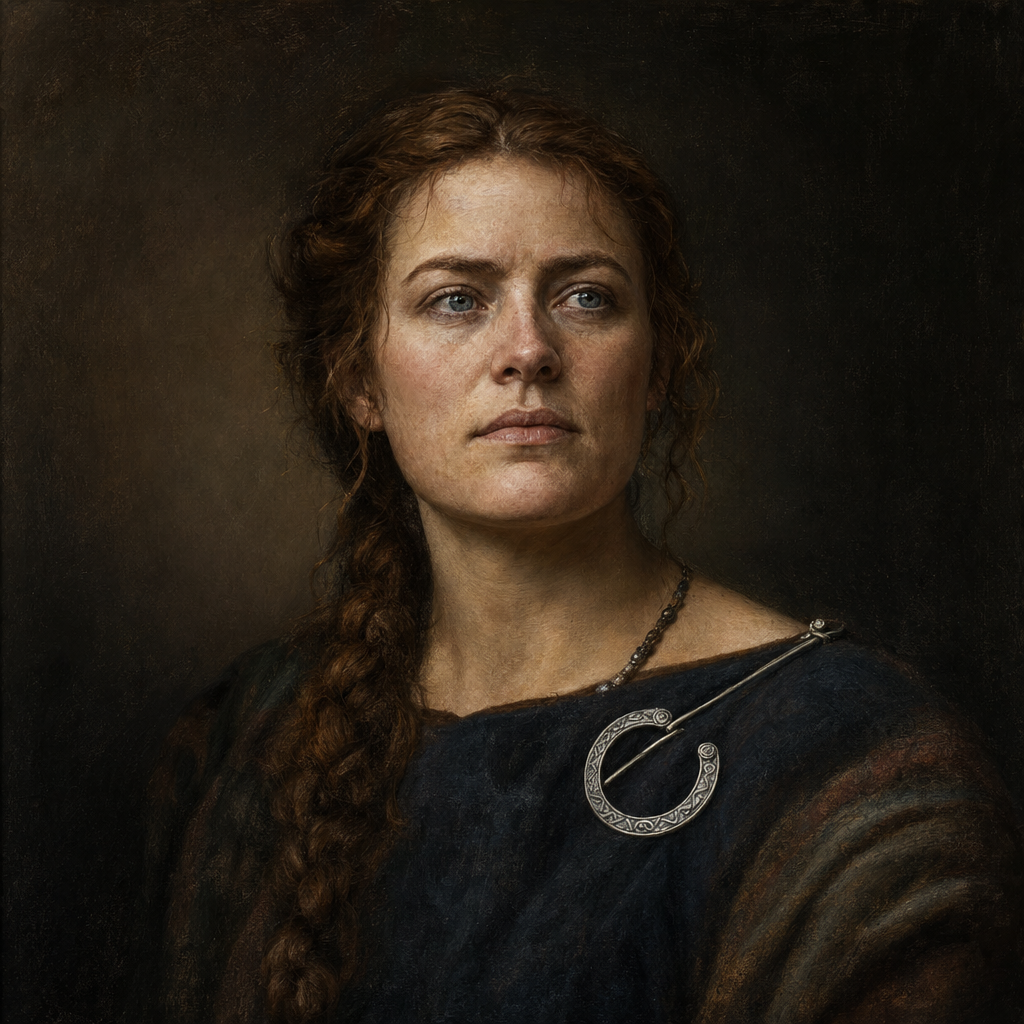
- Catalog tier
- Iconic discoveries
- Period
- c. 420-630 CE
- Found
- Lundin Links, Fife, Scotland
- Sequenced genomes
- 5 (LUN001, KD001.SG, LUN003, BAL003.merged, LUN004.merged)
Who they were
The painted people of the Roman frontier, the Picts left carved symbol stones and a kingdom north of the walls, but almost no words, and centuries of legend grew into the silence. These individuals are their genetic voice: men and women from the shore cemetery of Lundin Links in Fife, its round and square burial cairns exposed by a winter storm in 1965, from Balintore in Easter Ross, and a powerfully built man laid in a cave on the Black Isle, his body weighted down with stones after a violent death. Their genomes end the old fantasies of an exotic lost race: the Picts were the native people of Iron Age Scotland. And the women of Lundin Links, each of a different maternal line, quietly argue against the medieval tale that Pictish crowns passed through mothers.
The genome-wide data behind this entry was published in Imputed genomes and haplotype-based analyses of the Picts of early medieval Scotland reveal fine-scale relatedness between Iron Age, early medieval and the modern people of the UK.
How your distance is measured
Every Ancestry Map includes the free Notable Matches lens: your coordinates are compared to every sequenced member of every catalog entry, and the distance to the closest member is reported, a Euclidean distance in the same 25-dimensional space the Distance lens uses. Because these are a small group of real individuals, not a population average, distances naturally run larger than population distances. That is expected, not a poor result. And one thing is never claimed: a small distance means similar ancestry composition, not that the Picts are your ancestor. See how it looks in the live demo or read about Ancestry Map, the full Global25 report.
Questions
Who were the Picts?
The Picts (c. 420-630 CE, Lundin Links, Fife, Scotland) are one of the Iconic discoveries entries in our Notable Matches catalog, represented by 5 sequenced ancient genomes published in the study "Imputed genomes and haplotype-based analyses of the Picts of early medieval Scotland reveal fine-scale relatedness between Iron Age, early medieval and the modern people of the UK".
What does "matching" the Picts mean?
Your Global25 coordinates are compared to the entry's sequenced members and the distance to the closest one is reported, a Euclidean distance in the same 25-dimensional reference space the Distance lens uses. A notable entry is one person or one small burial group, not a population average, so distances naturally run larger than population distances.
Are they my ancestor?
No, and no DNA test can show that. A small distance means your genome sits near theirs in a shared reference space: similar ancestry composition, not descent. Ancestrify never claims a notable individual is your ancestor or relative.
How do I see my own distance to the Picts?
Notable Matches is a free lens on every Ancestry Map, never sold separately. Order Ancestry Map, our Global25 analysis (29.99 EUR), and your report ranks your coordinates against the full catalog, with a portrait, dossier and map for every entry. The public demo shows the lens with example data.
More from the catalog
The catalog holds every published entry across three tiers. Browse the full Notable Matches directory. Nearby entries:
The Gepid Kingdomc. 450-560 CE
The Early Bavariansc. 500-600 CE
The Tylos-Era Bahrainisc. 300-650 CE
The Anglo-Saxonsc. 450-750 CE
The Moche of Huaca Cao Viejoc. 200-600 CE
The Lovelock Cave Peoplec. 150-1400 CE
The Kofun-Period Japanese of Iwadec. 570-630 CE
The European Hun Elites5th century CE
The Visigoths of Iberiac. 480-770 CE
The Silla Nobles of Gyeongsanc. 300-500 CE
The Huns of the Tian Shanc. 150-600 CE
The Merovingians of Koksijdec. 620-750 CE